At a glance
The short answer
Korean temple food, or sachal eumsik (사찰음식), is food prepared within Korean Buddhist tradition. It generally excludes meat and fish and also avoids osinchae (오신채), five pungent vegetables that include garlic and several onion-family plants. Flavor is developed with seasonal produce, grains, tofu, mushrooms, sea vegetables, perilla, and fermented seasonings. Restaurant and packaged versions still require direct ingredient checks, especially for strict vegan, alcohol, soy, sesame, gluten, or allergy needs.
A cuisine connected to practice
The Korean term sachal eumsik literally points to temple food, but the meal is not simply restaurant style transported behind monastery walls. In Buddhist context, obtaining, preparing, receiving, and finishing food can all be part of practice. The word gongyang (공양), often translated as an offering or meal, emphasizes gratitude and relationship rather than consumption alone.
This context prevents a common misunderstanding. Temple food is not defined only by a list of prohibited ingredients, nor is it a wellness product invented for modern diners. Its contemporary appeal may overlap with interest in vegetarian food and sustainability, but its organizing principles come from religious life and accumulated cooking knowledge. A public restaurant can introduce the cuisine while a temple meal carries an additional setting and discipline.
What osinchae changes in the kitchen
Alongside avoiding meat and fish, Korean temple food traditionally excludes osinchae, the five pungent vegetables. English lists vary slightly in plant naming, but official visitor material commonly identifies garlic, green onion, chives, wild chives, and Chinese squill or a related leek. The reason is connected to Buddhist approaches to calm practice, not to a claim that these vegetables are universally unhealthy.
For a cook, their absence is substantial. Garlic and scallion are frequent aromatic foundations in everyday Korean food. Removing them changes kimchi, namul seasoning, broth, pancakes, sauces, and garnishes. Temple cooking therefore cannot be reproduced faithfully by taking a standard meat dish, removing the meat, and leaving every other step untouched. The flavor architecture has to be reconsidered from the beginning.
Fermentation supplies depth without imitation
Jang—fermented sauces and pastes such as ganjang and doenjang—can provide salt, aroma, savoriness, and continuity across seasons. Jang is not used merely to make vegetables “taste like meat.” It has its own history and range. A clear soup seasoned with soy sauce, a dense soybean-paste dressing, and a pickle matured in a jang-based brine each place fermentation in a different role.
Kimchi and other ferments also need a separate temple approach because many common kimchi recipes use garlic, green onion, fish sauce, or salted seafood. Temple preparations can work with salt, vegetables, grain pastes, fruit, or other seasonings, but recipes vary by temple. “Temple-style kimchi” should signal a different formulation, not a universal ingredient guarantee.
Season and locality become active seasonings
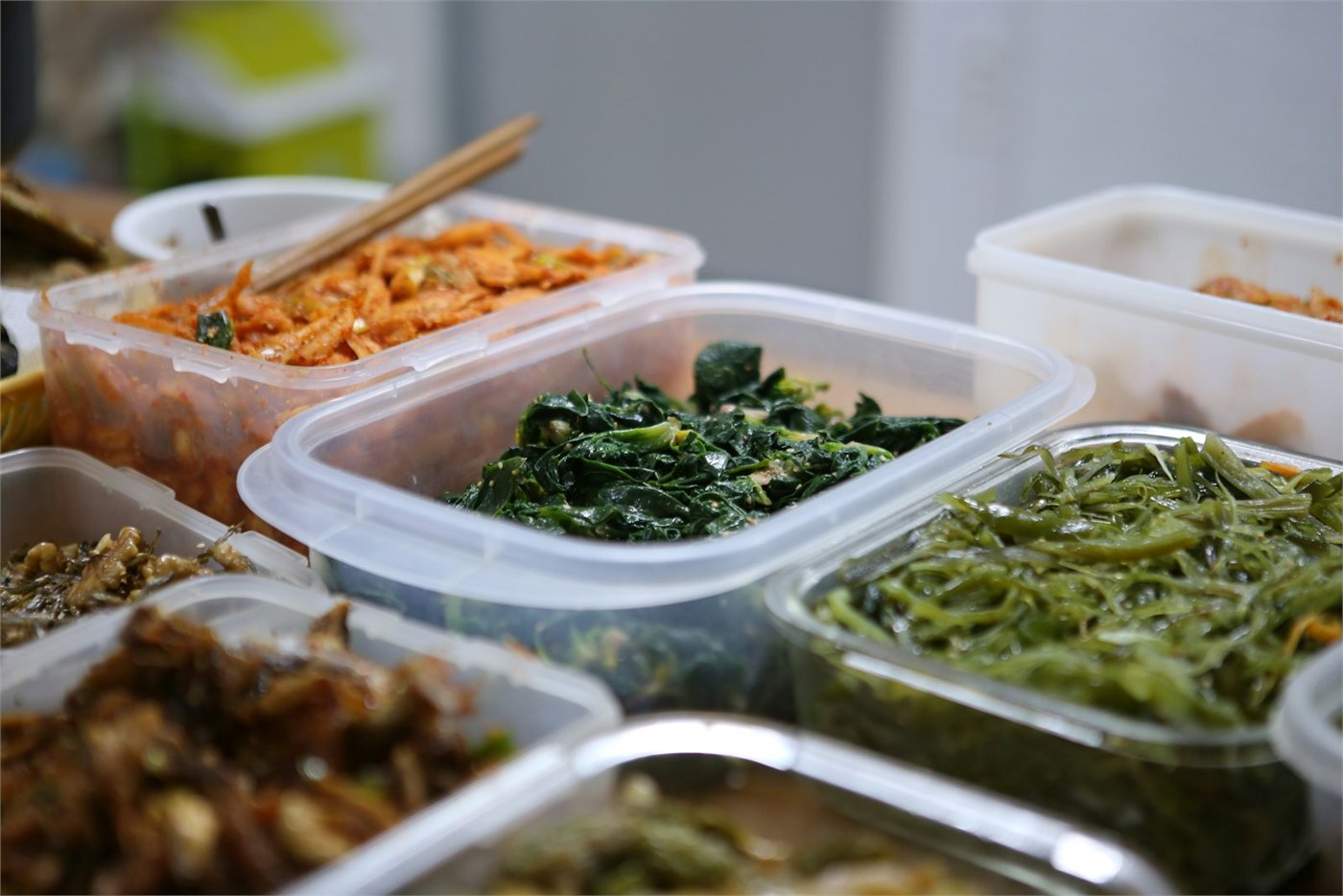
When a kitchen pays close attention to what is growing nearby, season is not decorative menu language. Spring shoots, summer vegetables, autumn mushrooms, winter roots, dried greens, beans, grains, and preserved foods create a changing set of possibilities. Blanching, drying, soaking, steaming, fermenting, and slow simmering reveal different aspects of the same plant.
This is one reason there is no single temple-food menu for all of Korea. Mountain environment, local agriculture, community knowledge, and each temple’s practice influence what appears. Official recognition in Korea treats temple food as a communal tradition rather than the invention of one named owner. Variation is part of the living form, provided the underlying practice remains legible.
Restraint does not mean flavorlessness
A restrained dish can still be aromatic, bitter, sweet, sour, nutty, earthy, crisp, or deeply fermented. Mushrooms and kelp can strengthen broth; perilla seeds can add body; sesame can add fragrance; toasted or dried ingredients can deepen aroma; carefully balanced jang can lengthen the finish. The point is not maximum impact in every bite, but attention to the ingredient’s own character.
That distinction matters when ordering. A diner expecting a chile-heavy version of every Korean dish may read subtlety as absence. Instead, compare textures, notice the sequence of seasonal vegetables, and taste broth before adding anything. Temple food asks a different question from a flavor competition: how much intervention does this ingredient need?
How to approach a temple-food meal respectfully
At a public temple-food restaurant, ask whether the meal is a set or a course, which dishes are seasonal, and whether drinks or desserts are included. Eat at a pace that lets you compare the dishes, take only what you can finish when self-service is offered, and treat the religious language on the menu as context rather than décor.
Dietary labels still need precision. Some visitor guidance notes dairy as a possible exception, and public restaurants operate kitchens with their own sourcing and cross-contact conditions. Soy, sesame, wheat, nuts, alcohol-derived ingredients, and mushrooms may matter to individual diners. A temple-food label offers valuable information about tradition, but only the current kitchen can answer a current safety question.
- Ask what the restaurant means by “temple food” and whether it follows osinchae restrictions.
- For vegan needs, confirm dairy, honey, and packaged seasonings rather than relying on “vegetarian.”
- For allergies, ask about soy, sesame, wheat, nuts, and shared utensils or preparation areas.
- At a temple program, follow the host’s guidance about silence, serving, leftovers, and cleanup.
Words to recognize
Korean terms in this story
- Sachal eumsik · 사찰음식
- Korean Buddhist temple food.
- Osinchae · 오신채
- Five pungent vegetables traditionally avoided in Korean temple food.
- Gongyang · 공양
- An offering; in temple context, a respectful term connected with receiving a meal.
- Namul · 나물
- Vegetable dishes made through varied techniques such as blanching, seasoning, or sautéing.
- Jang · 장
- The family of fermented Korean sauces and pastes used to build seasoning depth.
Sources and editorial scope
References behind the story
The explanatory text is original to Korean Food Guide. These institutional records were used to verify cultural context, terminology, dates, or practical claims.
- Korean Temple Food: A Sustainable Cuisine Inspired by Buddhist TeachingsKorea Tourism Organization
Overview of Buddhist context, animal ingredients, osinchae, fermentation, and local produce.
- Temple food designated National Intangible Cultural HeritageKorea.net
Government account of the 2025 national designation, communal tradition, historical records, and Buddhist principles.
- Tips for VegetariansKorea Tourism Organization
Practical visitor guidance on temple food and the need for ingredient-specific restaurant questions.
Food traditions and recipes vary by household, region, producer, and restaurant. Confirm current ingredients directly when dietary, religious, or allergy requirements matter. Read our editorial policy.