At a glance
The short answer
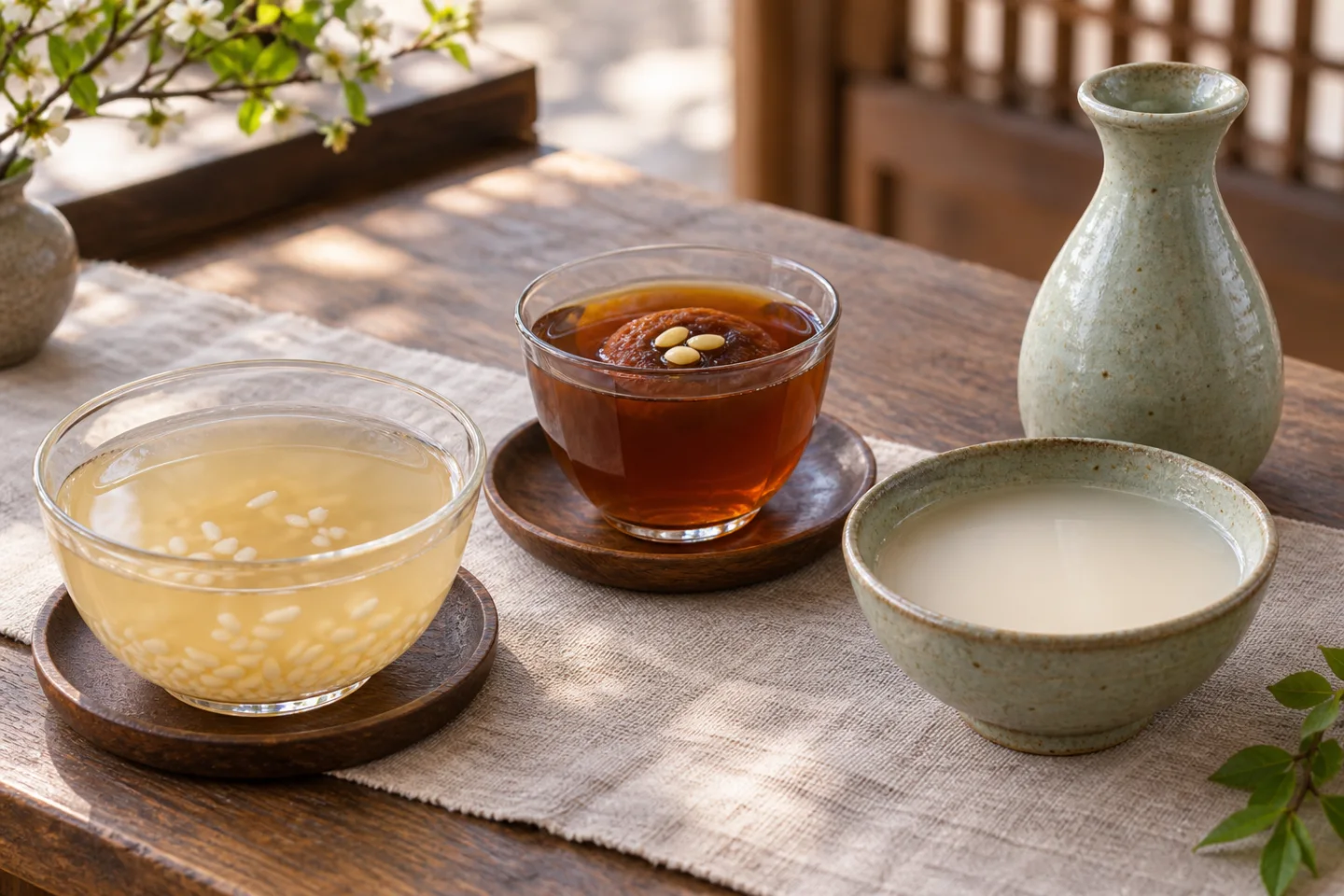
Sikhye (식혜) is a sweet, usually nonalcoholic rice-and-barley-malt drink served cold, often after a meal or during holidays. Sujeonggwa (수정과) is a dark cinnamon-and-ginger dessert punch commonly served with dried persimmon or pine nuts. Omijacha (오미자차) is a vivid fruit infusion made from omija, the “five-flavor” berry. Makgeolli (막걸리) is cloudy fermented alcohol made with grain, water, and nuruk. Recipes and packaged products vary, so check alcohol percentage, grain, sugar, nuts, and other ingredients on the current label.
Start with the role the drink plays
Korean beverages do not form one straight ladder from mild to strong. Some close a rich meal, some accompany a snack, some are brewed as alcohol, and some are fruit or herb infusions served hot or cold. A restaurant may offer only familiar commercial drinks, while a tea house, market, brewery, or holiday table reveals a much wider vocabulary.
Three questions prevent most confusion: Is it alcoholic? Is it fermented? Is it served as refreshment, dessert, or a companion to food? The answers separate drinks that may look similar. Sikhye and makgeolli can both begin with grain and appear pale in a cup, but one is usually a sweet nonalcoholic finish and the other is an alcoholic ferment.
Sikhye is malted-rice sweetness, not rice milk
Sikhye is made by using barley malt liquid with cooked rice. The process releases sweetness, and a few rice grains are often kept floating in the chilled drink. Korea.net’s traditional recipe archive describes sikhye as a widely loved beverage and notes the related names dansul and gamju. VISITKOREA places it among beverages long shared at holidays and feasts.
Its texture is lighter than a dairy drink, and the grains are part of the identity rather than a bubble-tea topping. Bottled versions are easy to find, but sweetness and grain content differ. Because traditional preparation uses barley malt, sikhye should not be assumed gluten-free. Packaged versions also deserve a direct ingredient check when barley, added sweetener, or manufacturing cross-contact matters.
Sujeonggwa and omijacha build flavor from spice and fruit
Sujeonggwa is a dark punch built around cinnamon and ginger. Dried persimmon can soften and sweeten the liquid, while pine nuts may float on the surface. It is commonly served cool as a dessert drink, especially in settings presenting traditional sweets or holiday foods. The warming aroma can suggest mulled drinks to an international visitor, but standard sujeonggwa is not wine and is usually nonalcoholic.
Omijacha uses omija berries, whose name refers to five tastes. VISITKOREA describes sweet, bitter, sour, spicy, and salty notes, although the balance in a café cup depends on concentration and added honey or syrup. Its red color and bright acidity make it visually distinctive. The suffix cha (차) is broader on Korean menus than leaf tea alone; fruit, grain, root, and herb preparations may all appear in the tea section.
Makgeolli is cloudy fermented sool
Makgeolli belongs to sool (술), the broad Korean word for alcoholic drinks. It is generally classified as takju, or cloudy alcohol, and is made by fermenting grain with water and nuruk, a fermentation starter. Korea.net’s food and culture resources distinguish cloudy takju from clear cheongju and distilled liquors. That map is more useful than treating every traditional Korean alcohol as a type of soju.
A bottle of makgeolli may be gently mixed before pouring because solids can settle, but packaging instructions come first. Some products are actively carbonated or continue to release gas, so opening and storage directions matter. Alcohol percentage, grain base, pasteurization, sweetness, and added flavor vary by producer. The cloudy appearance does not reveal those details.
Pairings are cultural shorthand, not strict rules
Jeon and makgeolli are a familiar pair, especially in popular stories about rainy days. The connection makes sensory sense: a lightly tart, creamy drink can sit beside crisp, savory pan-fried food. Yet the pairing is an invitation, not a law. Makgeolli may accompany tofu, boiled pork, acorn jelly, or a whole shared table, and jeon can be enjoyed without alcohol.
Sikhye and sujeonggwa often arrive after food, where sweetness, cold temperature, spice, or fruit can signal a change of pace. Omijacha can function as refreshment or a tea-house drink. Contemporary cafés and bars also reinterpret these flavors. The most respectful way to understand a pairing is to learn its usual setting, then pay attention to what the current kitchen or brewer has actually made.
Read the label before choosing the cup
Traditional names describe a family of preparations, not a universal formula. Sikhye can contain barley malt and substantial added sugar. Sujeonggwa may include pine nuts or other garnishes. Omija drinks may use honey or syrup. Makgeolli can be made from rice, wheat, or other grains and may contain sweeteners or flavorings. Café adaptations can introduce dairy or shared equipment that the classic description does not suggest.
For alcohol, check the printed percentage and follow local age, driving, medication, pregnancy, and health guidance. For allergies or religious and dietary requirements, ask about the ingredient list rather than judging by color. A good first tasting can be simple: choose one nonalcoholic dessert drink and, if appropriate for you, one clearly labeled traditional sool, then compare aroma, texture, sweetness, and when each feels at home on the table.
- Ask whether the drink contains alcohol and confirm its alcohol percentage.
- Check barley, wheat, rice, and nuruk when gluten or grain ingredients matter.
- Confirm pine nuts, honey, added sweeteners, dairy, and shared preparation for dietary needs.
- Ask whether the drink is served hot, cold, still, carbonated, before food, or after the meal.
Words to recognize
Korean terms in this story
- Sikhye · 식혜
- A sweet drink made with cooked rice and barley malt liquid, usually served chilled and nonalcoholic.
- Sujeonggwa · 수정과
- A cinnamon-and-ginger dessert punch often served with dried persimmon or pine nuts.
- Omijacha · 오미자차
- A tea-like fruit infusion made from omija, known as the five-flavor berry.
- Makgeolli · 막걸리
- A cloudy Korean fermented alcoholic drink made with grain, water, and nuruk.
- Nuruk · 누룩
- A grain-based fermentation starter used in traditional Korean alcohol.
- Sool · 술
- The broad Korean word for alcoholic drink.
Sources and editorial scope
References behind the story
The explanatory text is original to Korean Food Guide. These institutional records were used to verify cultural context, terminology, dates, or practical claims.
- Beverages and DessertsKorea Tourism Organization
Visitor overview of sikhye, sujeonggwa, makgeolli, and their ingredients and customary settings.
- Korean recipes: Sikhye and MaejakgwaKorea.net
Government recipe archive for barley malt, rice grains, sweetness, related names, and traditional service.
- Omija TeaKorea Tourism Organization
Ingredient, five-flavor terminology, season, and common tea or syrup preparation.
- Types and Brewing of Traditional LiquorsKorea.net
Institutional overview of nuruk and the distinctions among takju, cheongju, and distilled traditional alcohol.
- The Story Behind K-Food in K-ContentKorea Tourism Organization
Current visitor context for the familiar rainy-day pairing of jeon and makgeolli.
Food traditions and recipes vary by household, region, producer, and restaurant. Confirm current ingredients directly when dietary, religious, or allergy requirements matter. Read our editorial policy.