Quick answer
What you need to know
For two diners, begin with one clear main format: two individual bowls, a shared barbecue order, or one shared dish plus rice. Check minimum portions and what banchan are included before adding extras. Taste table seasonings before using them, ask whether a pot is shared, and order a second round only after seeing the actual serving size.
Choose the restaurant format first
A soup shop, barbecue restaurant, noodle specialist, fried-chicken pub, market stall, and hanjeongsik venue organize meals differently. At a soup shop, each diner may order one bowl and receive banchan automatically. At barbecue, meat portions and a shared grill define the meal. At a specialist, the shortest menu can be a sign of focus rather than limited choice.
Look at what nearby tables receive and read the menu headings. Words such as jeongol or large serving sizes suggest sharing; gukbap, tang, jjigae in an earthen bowl, noodles, and bibimbap are often individual, though not always. When uncertain, ask “Is this for one person or for sharing?” before calculating quantity.
Build the first order around one anchor
An anchor can be a bowl, a grill, a hot pot, or a large shared dish. Add contrast only where the meal needs it: rice with a stew, a cool noodle after barbecue, or one pancake for a group. Ordering bibimbap, barbecue, fried chicken, tteokbokki, and a hot pot together creates expense and leftovers without necessarily creating a coherent introduction.
A practical two-person meal might be two individual soups; two required barbecue portions with rice or stew; or one medium shared dish with two bowls of rice. Menus and appetites vary, so treat those as planning patterns rather than portion guarantees. Add food after the first dishes arrive.
Ask two different questions about “spicy”
First ask whether the dish is normally chile-hot. Then ask whether the heat can be adjusted. A broth or batch-made sauce may already be fixed, while bibimbap sauce can often be added by the diner. “Mild” may still be warmer than expected, and a non-red dish may contain fresh chile or pepper.
Maeweoyo? (매워요?) means “Is it spicy?” An maepge haejuseyo (안 맵게 해주세요) asks for it not to be spicy, but the kitchen may not be able to change a base preparation. If you need zero chile for a medical reason, explain the ingredient restriction rather than relying on a subjective heat word.
Use the service system that is actually there
Many restaurants have a call button on the table, an ordering tablet, a kiosk, or a self-service area for water and banchan. Others use conventional table service. A drawer beneath or beside the table may hold spoons, chopsticks, and napkins. Pause and scan the setup before calling for items already within reach.
To attract staff in a traditional service setting, yeogiyo (여기요) means roughly “Over here, please.” Gamsahamnida (감사합니다) means “Thank you.” Polite tone and a clear gesture are more useful than perfect pronunciation. If a kiosk has no accessible language option, ask staff rather than guessing at a modifier that may change the dish.
Understand what arrives without being ordered
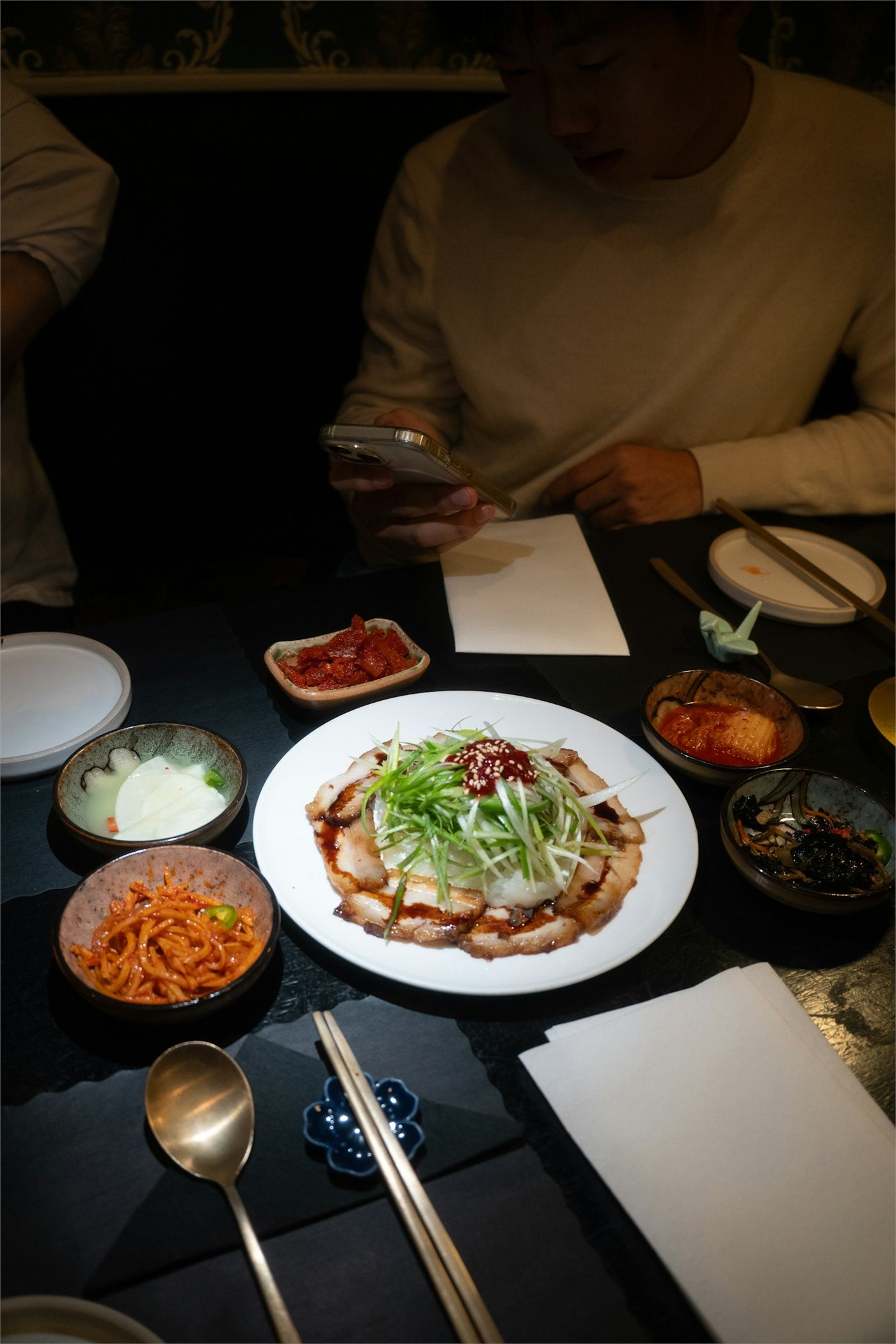
Banchan and water commonly arrive as part of the meal, but practices vary. Do not assume every extra-looking plate is free, refillable, or optional. A steamed egg, soup, wrap basket, or set component may be included at one restaurant and separately priced at another. The printed menu and staff answer control.
At the end, payment may happen at the counter rather than at the table. Tipping is generally not part of ordinary Korean restaurant service, as VISITKOREA notes, though tourist-facing or exceptional venues may have their own policies. Follow posted charges and never substitute a broad cultural rule for the actual bill.
Menu vocabulary
Key Korean terms
- Yeogiyo · 여기요
- “Over here, please,” used to get a server’s attention.
- Maeweoyo? · 매워요?
- “Is it spicy?”
- Il-inbun · 1인분
- One serving or one person’s portion, commonly shown as “1인분” on menus.
- Gachi meogeoyo · 같이 먹어요
- “We eat it together” or “Let’s share it.”
Sources and scope
References used for this guide
We wrote the explanatory text independently and used the following institutional references to verify cultural context, terminology, or practical claims. Links open the source publisher’s page.
- VISITKOREA: About Korean FoodKorea Tourism Organization
Current visitor guidance on utensils, service, call buttons, refills, and tipping.
- Muslim Visitor’s FAQKorea Tourism Organization
Ingredient-specific restaurant questions presented for international visitors.
Recipes, menus, prices, and restaurant practices change. Confirm current ingredients directly when dietary, religious, or allergy requirements matter. Read our editorial policy.