Quick answer
What you need to know
Begin with one sauced item such as tteokbokki, one neutral handheld item such as gimbap, and one fried or brothy item to share. Confirm serving size before adding more. Tteokbokki often contains fish cake; gimbap commonly contains egg, ham, imitation crab, or tuna; eomuk is fish cake; twigim may share oil with seafood and wheat batter; sundae is a Korean blood sausage, not an ice-cream dessert.
Bunsik describes a casual food world
Bunsik (분식) originally referred to flour-based food, and the term developed into a broader category of affordable, casual dishes. A bunsik menu may include tteokbokki, gimbap, ramyeon, eomuk, twigim, mandu, sundae, and mixed noodles. Many items are served quickly and are easy to combine.
A bunsik shop is not necessarily an outdoor street stall. It may be a small seated restaurant, a counter, a market business, or a contemporary chain. “Street food” is a convenient international label, but the food also belongs to school-day snacks, neighborhood meals, late-night stops, and everyday urban routines.
Tteokbokki leads with sauce and chew
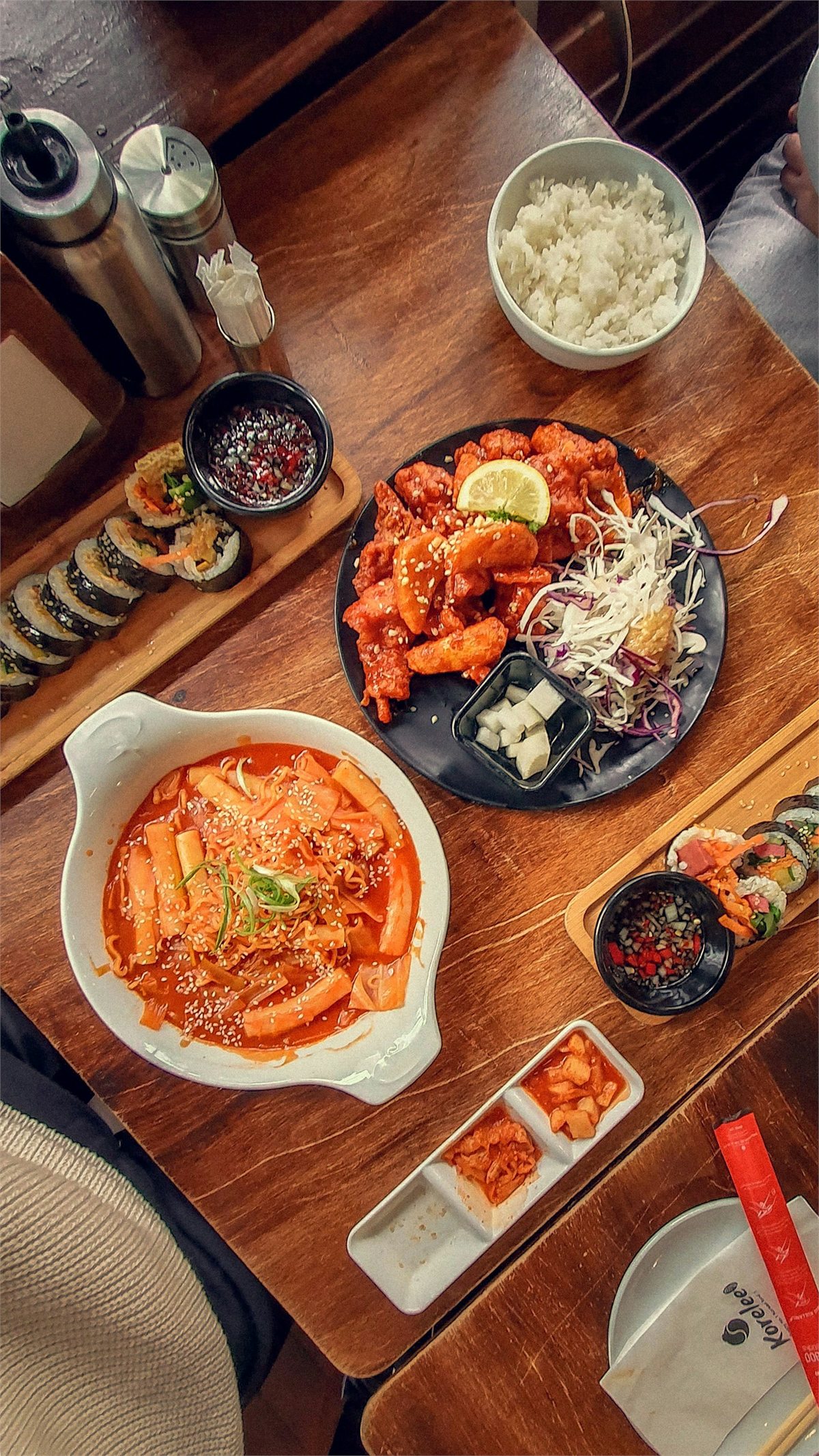
The familiar red tteokbokki combines chewy rice cakes with a sweet-hot gochujang-based sauce. Fish cake and cabbage are common; egg, noodles, dumplings, or cheese may be added. Heat varies widely, and some shops specialize in levels that are far hotter than the color suggests.
Order a modest portion first. Rice cakes are dense and filling, while sauce invites additional fried food. Gungjung-tteokbokki offers a soy-seasoned, typically non-red direction, and contemporary cream or “rose” versions soften the chile impression but may add dairy. None of these labels alone settles allergy or religious-diet questions.
Gimbap is portable, but the filling matters
Gimbap (김밥) rolls seasoned rice and fillings in gim, dried seaweed. Standard shop versions often include pickled radish, carrot, spinach, egg, and ham or another processed protein. Tuna, cheese, beef, kimchi, vegetables, and many house combinations create separate menu items.
Gimbap is commonly sliced and eaten as a complete snack or light meal. It pairs well with tteokbokki because the rice and fillings temper a strong sauce. Vegetarian diners should not assume a vegetable-looking roll was made without egg, ham, imitation crab, fish cake, or shared utensils; ordering a named vegetable version is only the first check.
Eomuk, twigim, mandu, and sundae
Eomuk (어묵) is processed fish cake, served on skewers in broth or included in other dishes. Twigim (튀김) means fried food and may include vegetables, squid, shrimp, sweet potato, seaweed rolls, or dumplings. Mandu (만두) are dumplings with meat, kimchi, vegetable, tofu, or mixed fillings. The name of the category does not reveal the filling.
Sundae (순대), pronounced roughly soon-dae, is Korean sausage traditionally made with casing and a filling that can include blood, glass noodles, and other ingredients. Regional and shop recipes differ. It may be served with salt, seasoned paste, or organ-meat pieces. Ask what is included rather than assuming the English spelling describes dessert.
Sweet snacks and seasonal stops
Hotteok (호떡) is a griddled filled pancake, often with brown sugar, cinnamon, seeds, or nuts. Bungeoppang (붕어빵) is a fish-shaped pastry commonly filled with sweet red bean paste or custard; the shape does not mean it contains fish. Gyeranppang (계란빵) is egg bread. Summer and winter bring different vendor rhythms and specialties.
Nut, sesame, wheat, egg, and dairy risks vary, and stall communication may be limited during a rush. Watch preparation only as a clue, not proof: shared griddles, oil, scoops, and storage can create cross-contact. For a serious allergy, choose a vendor able to confirm the full recipe and process or use a labeled alternative.
Order a balanced snack table
For two or three people, one tteokbokki, one roll of gimbap, and a small choice of twigim or eomuk can already be substantial. Add one unfamiliar item after tasting rather than ordering five starch-heavy portions at once. If eating while standing, keep the counter clear and return skewers, bowls, or trays where the vendor indicates.
Prices and payment methods should be visible or confirmed before ordering. Traditional markets increasingly accept cards, but a backup payment method can still be useful. Dispose of waste in the vendor’s system, avoid blocking neighboring businesses for photographs, and remember that the meal is ordinary work for the people serving it—not just a social-media backdrop.
Menu vocabulary
Key Korean terms
- Bunsik · 분식
- A broad category of affordable casual foods, historically linked to flour-based dishes.
- Eomuk · 어묵
- Processed fish cake.
- Twigim · 튀김
- Fried food; the ingredient follows or is shown separately.
- Sundae · 순대
- Korean sausage, often made with blood and glass-noodle filling.
Sources and scope
References used for this guide
We wrote the explanatory text independently and used the following institutional references to verify cultural context, terminology, or practical claims. Links open the source publisher’s page.
- VISITKOREA: Bunsik & Street FoodKorea Tourism Organization
Bunsik context and representative dishes including tteokbokki, gimbap, sundae, and twigim.
- VISITKOREA: About Korean FoodKorea Tourism Organization
Street-food and broader Korean dining context.
Recipes, menus, prices, and restaurant practices change. Confirm current ingredients directly when dietary, religious, or allergy requirements matter. Read our editorial policy.