Quick answer
What you need to know
Do not judge allergen safety by a dish’s name or appearance. Ask about the complete sauce, broth, marinade, garnish, kimchi, and shared cooking equipment. Carry your written allergy information and the emergency plan or medication recommended by your clinician. If staff cannot confidently confirm ingredients and cross-contact controls, choose a sealed labeled product or another restaurant.
Start with the ingredients that repeat across the table
Soy sauce, fermented soybean paste, chile paste, sesame oil, sesame seeds, egg, anchovy stock, fish sauce, salted shrimp, seafood, and wheat-based noodles or batters appear in many Korean kitchens. A single meal can place several of them in sauces, broth, banchan, and the main dish. The same ingredient may be present even when it is not visible.
The U.S. FDA identifies milk, egg, fish, crustacean shellfish, tree nuts, peanuts, wheat, soybeans, and sesame as major food allergens under U.S. labeling law. Other countries define and label allergens differently. That list is a useful reminder of common risks, not a claim that a restaurant in Korea follows U.S. packaged-food rules.
Sauces and pastes can connect several allergens
Ganjang is made from soy and many commercial varieties contain wheat. Gochujang commonly contains soy and grain ingredients and may include wheat. Ssamjang blends fermented pastes and often includes sesame. A marinade can add pear, garlic, sugar, soy sauce, sesame oil, or other components. “Just grilled meat” is therefore not allergen-simple when it was marinated.
Ask to see a current product label when feasible. A familiar brand may reformulate, and a refill container at a restaurant may not identify its source. “No sesame seeds on top” does not address sesame oil in the seasoning, just as “no tofu” does not address soy sauce.
Broth and fermentation are easy to overlook
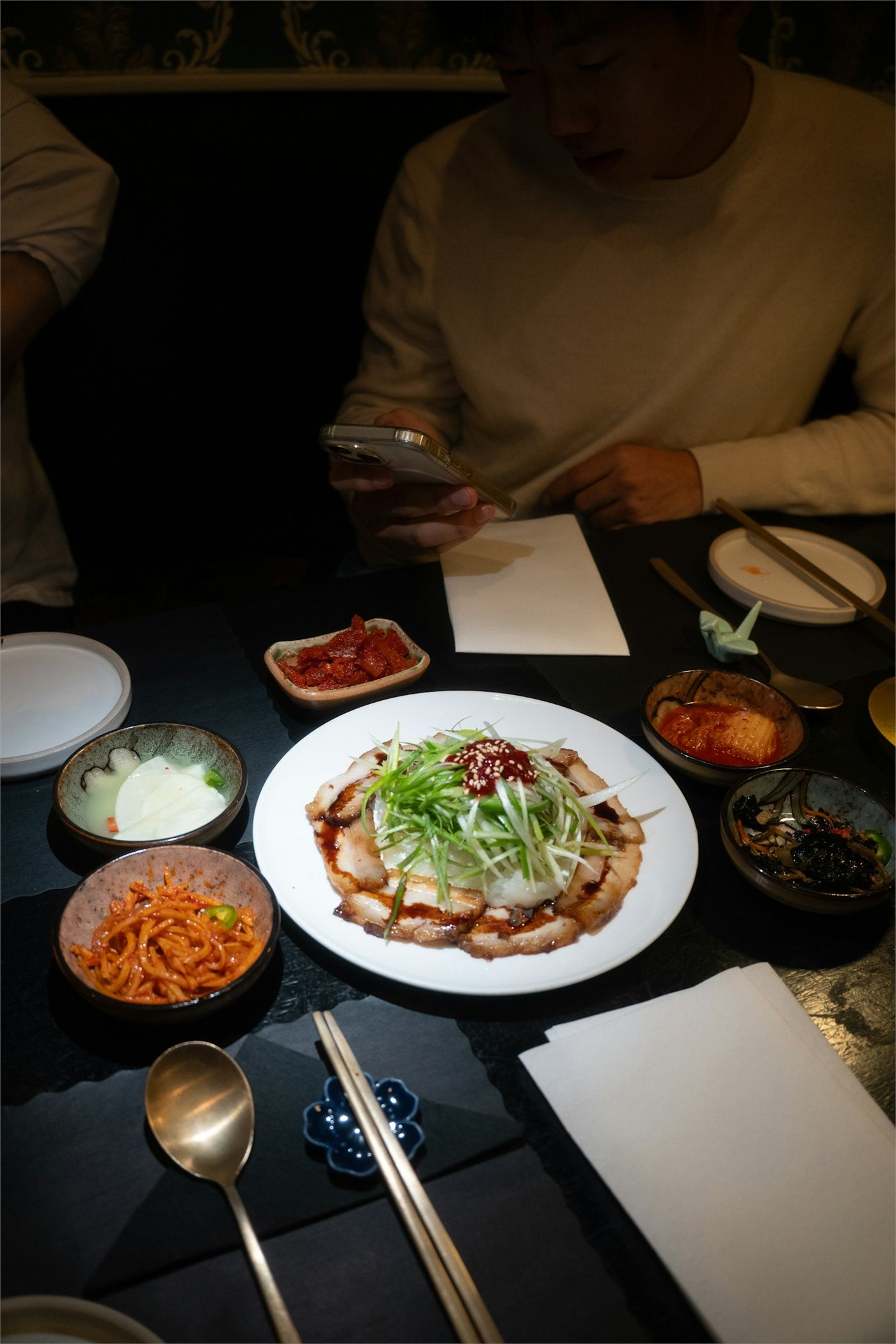
Anchovies, kelp, dried seafood, beef, pork, chicken, and shellfish can build broths. Kelp in the pot does not prove that the stock is fish-free. Kimchi may contain fish sauce or salted shrimp, and that kimchi can then season stew, fried rice, pancakes, dumplings, or noodles. A seafood allergen can travel through a dish without an obvious piece of seafood.
Ask “What is the broth made from?” and “Does the kimchi or seasoning contain fish sauce or salted shrimp?” These questions are more actionable than “Is this safe?” because the server can check a base recipe or package. For strict avoidance, also ask whether the same ladle, fryer, grill, or prep surface handles the allergen.
Useful Korean sentences to show staff
Keep the message short, written, and specific. “Sikpum alleoreugiga isseoyo” (식품 알레르기가 있어요) means “I have a food allergy.” Follow it with the exact ingredient in Korean and a direct statement that you cannot eat it. A translation card prepared before travel is safer than assembling a complex sentence while ordering.
Two helpful questions are “I eumsige [ingredient]i deureogayo?” (이 음식에 [ingredient]이 들어가요?)—“Does this food contain [ingredient]?”—and “Gateun joridogu-reul sayonghanayo?” (같은 조리도구를 사용하나요?)—“Do you use the same cooking utensils?” Particle forms can change with the ingredient name, so showing a professionally checked card is best for a severe allergy.
- Sesame: chamkkae (참깨); sesame oil: chamgireum (참기름).
- Soybean: daedu (대두) or kong (콩); soy sauce: ganjang (간장).
- Wheat: mil (밀); egg: gyeran (계란) or dalgyal (달걀).
- Peanut: ttangkong (땅콩); milk: uyu (우유).
- Shrimp: saeu (새우); crab: ge (게); fish: saengseon (생선).
Build a travel plan before the first meal
Carry more than one copy of an allergy card, keep prescribed emergency medication accessible, and know how to contact local emergency services according to your clinician’s travel advice. Research dedicated or well-reviewed venues, but re-confirm on arrival. Online comments and old menus cannot guarantee today’s ingredients or staff procedures.
Pack a safe backup food where travel rules allow. At shops, read the complete current label and remember that local labeling requirements differ. When risk cannot be clarified, a simple sealed product with a verified label may be a better meal than a complex restaurant dish. This guide cannot determine whether any specific food is safe for an individual.
Menu vocabulary
Key Korean terms
- Chamkkae · 참깨
- Sesame seeds.
- Chamgireum · 참기름
- Toasted sesame oil.
- Mil · 밀
- Wheat.
- Daedu · 대두
- Soybean, a term commonly seen on allergen labels.
- Saeu · 새우
- Shrimp.
Sources and scope
References used for this guide
We wrote the explanatory text independently and used the following institutional references to verify cultural context, terminology, or practical claims. Links open the source publisher’s page.
- Food AllergiesU.S. Food and Drug Administration
Major allergens under U.S. law and limits of packaged-food labeling coverage.
- VISITKOREA: Tips for VegetariansKorea Tourism Organization
Hidden broth and seafood seasoning in common Korean dishes.
- Muslim Visitor’s FAQKorea Tourism Organization
Model for ingredient-specific written restaurant questions.
Recipes, menus, prices, and restaurant practices change. Confirm current ingredients directly when dietary, religious, or allergy requirements matter. Read our editorial policy.