Quick answer
What you need to know
Look for dedicated vegan restaurants or temple-cuisine specialists when strict avoidance matters. Elsewhere, dishes such as bibimbap, gimbap, japchae, tofu, noodles, pancakes, and vegetable banchan may be adaptable, but confirm the broth, kimchi, sauce, egg, meat garnish, and seafood seasoning separately. “Please remove the meat” does not address stock or fish sauce.
Why vegetable-forward is not always vegetarian
A bowl can be covered with vegetables and still use anchovy broth. Kimchi can contain fish sauce or salted shrimp. Seasoned greens can include seafood-based seasoning, and tofu stew can arrive with meat, shellfish, or egg. Removing visible beef from bibimbap does not change a sauce or vegetable prepared earlier with animal ingredients.
The most reliable approach is to separate the question into layers: stock, seasoning, toppings, and cooking surface. This gives staff something concrete to check. It also makes clear whether you avoid meat only, all seafood, eggs and dairy, honey, or cross-contact. A single borrowed word may not communicate those boundaries accurately.
Dishes with adaptation potential
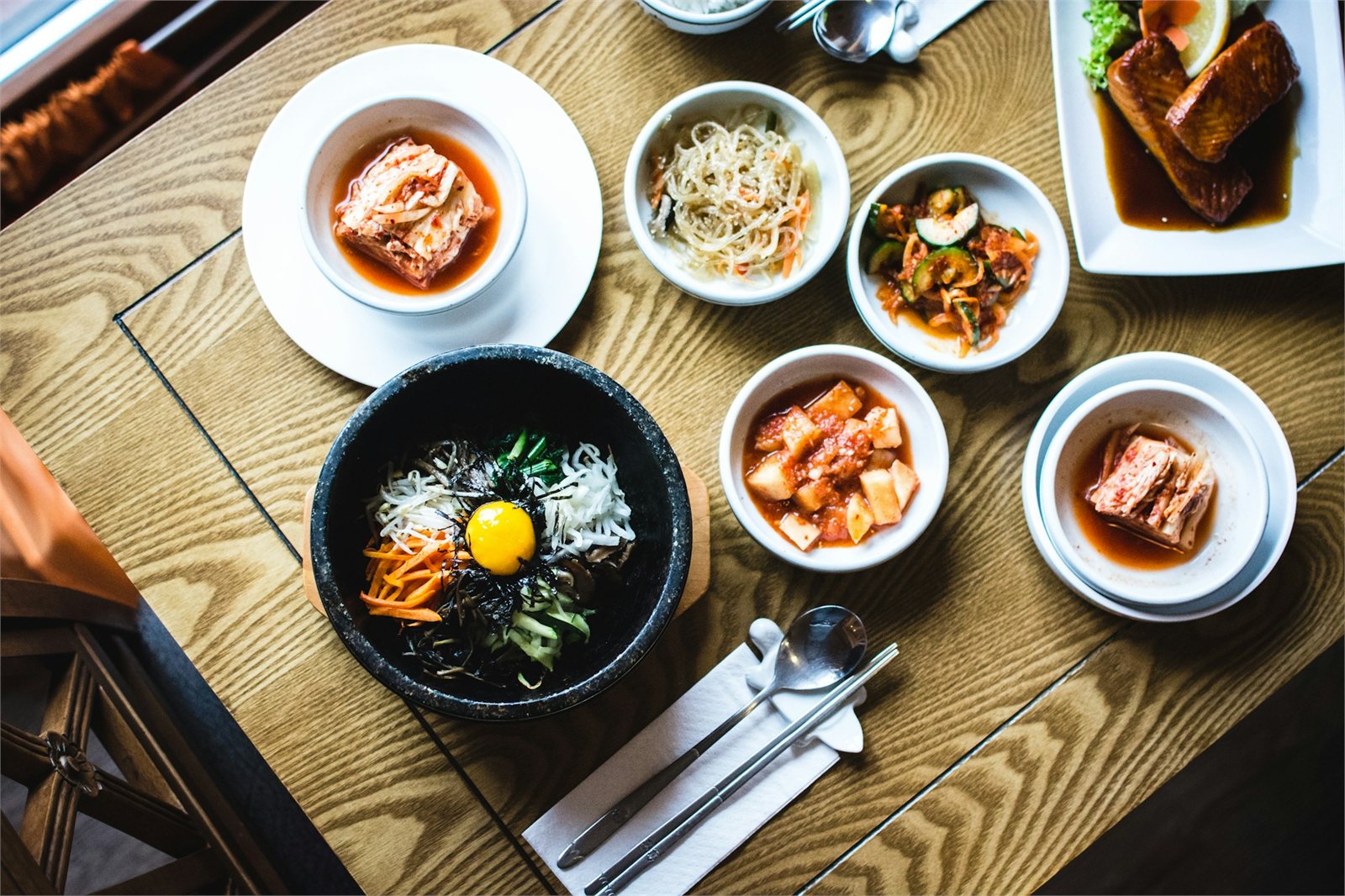
Bibimbap can work when meat and egg are omitted and the sauce and namul are confirmed. Gimbap can be made without ham, imitation crab, tuna, or egg, but advance preparation may limit changes. Japchae may be cooked with beef or seasoned in a shared batch. Dubu-jorim, pancakes, noodles, and vegetable dumplings each need their own ingredient check.
Kongguksu—cold noodles in a soybean broth—can be a useful plant-forward summer choice, but egg garnish and noodle ingredients still require confirmation. Plain rice, grilled mushrooms, fresh lettuce, simple tofu, and clearly identified vegetable banchan can build a meal, yet sauces served alongside them may contain the ingredients you avoid.
Temple cuisine offers a clearer tradition
Korean temple food, sachal eumsik (사찰음식), is a Buddhist culinary tradition that excludes meat and fish. It emphasizes grains, tofu, mushrooms, seasonal vegetables, wild greens, fermentation, and restrained seasoning. Traditional temple practice also excludes the five pungent vegetables known collectively as osinchae, including garlic and several alliums.
A restaurant using “temple-inspired” language is not automatically operated under temple rules, so strict diners should still ask. At a genuine specialist, however, the cuisine provides a coherent experience rather than a conventional meat dish with one component removed. It also demonstrates that plant-based Korean food is an established culinary tradition, not merely a modern substitution.
Ask about the base, not just the garnish
Useful questions include: Does the broth contain meat or anchovy? Does the kimchi contain fish sauce or salted shrimp? Is the dish cooked with egg? Is meat already mixed into the sauce? For a vegan request, say that you do not eat meat, fish, seafood, eggs, or dairy rather than relying on a general label if there is any doubt.
The sentence “Gogi, saengseon, haemul, gyeran, uyu-reul meokji anayo” (고기, 생선, 해물, 계란, 우유를 먹지 않아요) communicates “I do not eat meat, fish, seafood, eggs, or milk.” Show the written Korean and the specific ingredients that matter to you. Staff may honestly be unable to change a broth or batch-prepared banchan.
Dedicated venues reduce ambiguity
A dedicated vegan restaurant can control menus more consistently than a grill house asked to improvise. Search current map listings, certification information, and restaurant notices, then confirm on the day because businesses and recipes change. Vegetarian-friendly is a useful lead, not a certification standard by itself.
Convenience stores and supermarkets can provide a backup meal when restaurant communication is difficult. Packaged food offers an ingredient list, but the language and allergen system may differ from your home country. Translation tools help identify words, while a current manufacturer statement is more reliable for strict avoidance than a social-media recommendation.
Build a satisfying meal instead of only subtracting
A good plant-based table still needs contrast and substance. Combine rice or noodles with tofu or beans, cooked greens, mushrooms, a fresh or pickled vegetable, and a confirmed sauce. Ask what the kitchen can prepare well rather than presenting a long list of removals from one unsuitable dish.
If the restaurant cannot confirm a broth or seasoning, thank the staff and choose another option. That is safer for the diner and fairer to the kitchen. The goal is not to prove that every Korean dish can be vegan; it is to find the parts of Korean cuisine that can meet your requirements without guesswork.
Menu vocabulary
Key Korean terms
- Chaesik · 채식
- Vegetarian eating; the exact exclusions still need clarification.
- Sacha eumsik · 사찰음식
- Korean Buddhist temple cuisine.
- Aekjeot · 액젓
- Fermented fish sauce used in some kimchi and seasonings.
- Saeujeot · 새우젓
- Salted fermented shrimp used as a seasoning.
Sources and scope
References used for this guide
We wrote the explanatory text independently and used the following institutional references to verify cultural context, terminology, or practical claims. Links open the source publisher’s page.
- VISITKOREA: Tips for VegetariansKorea Tourism Organization
Broth, kimchi, tofu, and ordering considerations for vegetarian travelers.
- Korean Temple Food: A Sustainable Cuisine Inspired by Buddhist TeachingsKorea Tourism Organization
Temple-cuisine principles, plant-based ingredients, fermented foods, and osinchae.
- Seven Korean Summer FoodsKorea Tourism Organization
Kongguksu and the need to confirm garnish ingredients.
Recipes, menus, prices, and restaurant practices change. Confirm current ingredients directly when dietary, religious, or allergy requirements matter. Read our editorial policy.