Quick answer
What you need to know
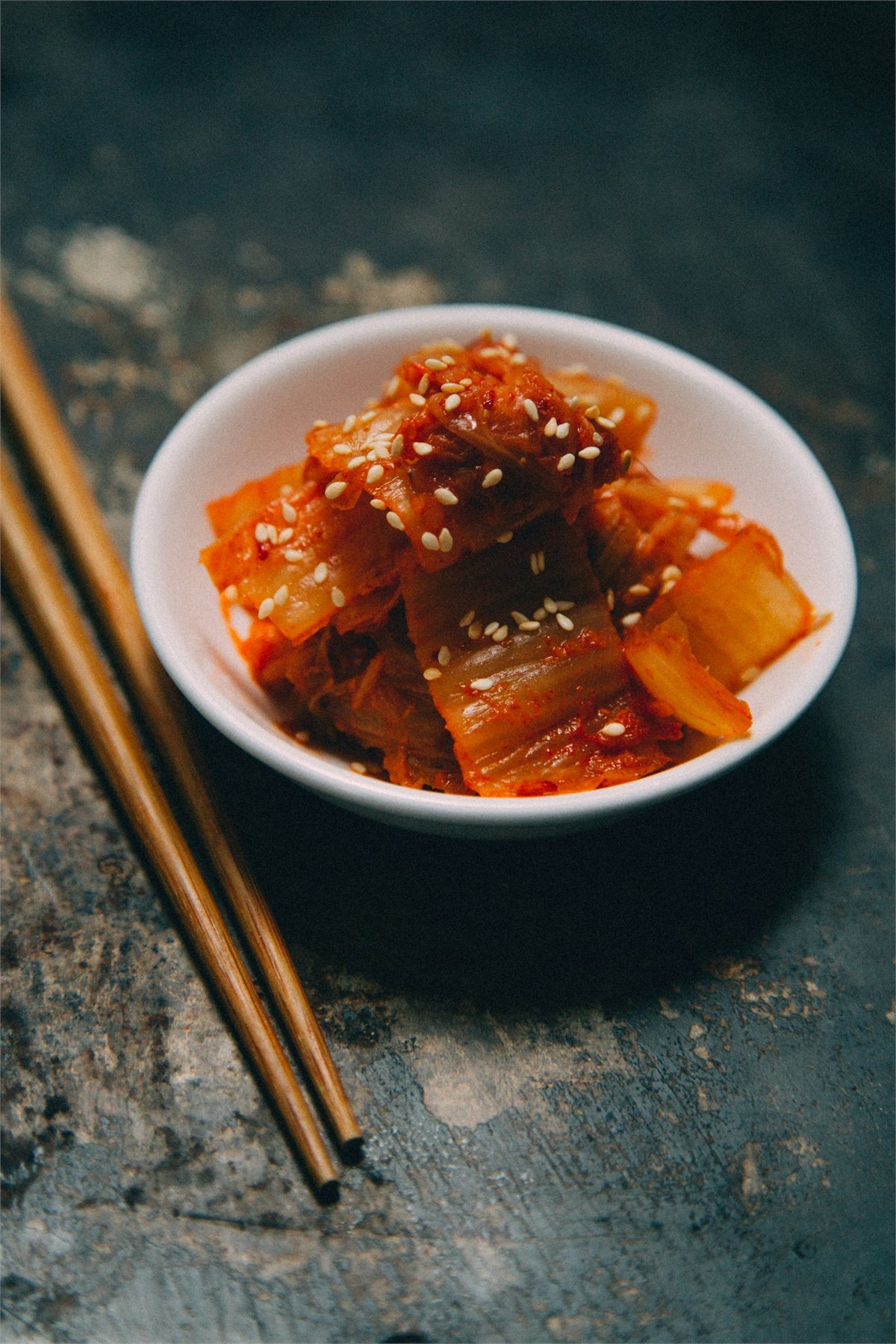
Kimchi (김치) is a category of seasoned vegetable preparations, many of which ferment. Napa-cabbage baechu-kimchi is the best-known style, but radish, cucumber, mustard greens, and watery or non-red versions are also common. Flavor changes over time from crisp and fresh toward tangier and more developed; seafood seasoning is common, so kimchi is not automatically vegan.
One name, many vegetables and methods
The word kimchi does not identify a single ingredient list. Baechu-kimchi (배추김치) uses napa cabbage. Kkakdugi (깍두기) is made from cubed radish. Oi-sobagi (오이소박이) is stuffed cucumber kimchi. Gat-kimchi (갓김치) uses mustard greens. Baek-kimchi (백김치) is a pale “white kimchi,” and dongchimi (동치미) is a refreshing radish kimchi served with a generous liquid.
Some types are boldly red and garlicky; others are clear, gently seasoned, or fruit-accented. The vegetable, salt treatment, seasoning mixture, temperature, and fermentation time all affect the result. That range is why “Do you like kimchi?” is almost as broad a question as “Do you like pickles?”
What fermentation changes
Salting first draws water from the vegetable and changes its texture. Seasoning is then applied, and naturally occurring lactic-acid bacteria drive fermentation under suitable conditions. As acidity develops, a newly made kimchi’s crisp, direct seasoning becomes tangier and more integrated. Temperature strongly affects the pace, so refrigerated kimchi changes more slowly than kimchi held warm.
There is no single day on which kimchi becomes “ready.” Geotjeori (겉절이), a fresh style intended for prompt eating, emphasizes crunch and immediate seasoning. Mature kimchi can be excellent at the table. Sharply sour kimchi is especially useful in cooked dishes because heat and other ingredients round its acidity.
Fresh, mature, and sour kimchi have different jobs
Fresh or lightly fermented cabbage kimchi pairs well with boiled pork, noodles, or a plain bowl of rice because its vegetable texture remains prominent. Moderately fermented kimchi is a versatile banchan. More developed kimchi can become kimchi-jjigae, kimchi-bokkeumbap, pancakes, braises, dumpling filling, or a topping for noodles.
A fizzy sensation, pressure in a sealed container, or a more acidic aroma can be normal signs of active fermentation, but fermentation does not make every change safe. Store-bought products should be handled according to the label. If a product has unexpected mold, a clearly putrid odor, or signs inconsistent with normal fermentation, do not taste it to investigate.
Kimchi is not automatically vegan or mild
Many traditional seasoning mixtures use aekjeot (fish sauce), saeujeot (salted shrimp), or other seafood ingredients. Some recipes use meat broth or less common regional additions. Vegan kimchi exists and can be excellent, but the vegetable base alone does not prove that a product is plant-based. Check the package or ask the maker.
Red color is not a precise heat scale. A white kimchi is usually mild, but different red kimchi batches can range from gentle to assertive depending on the chile and recipe. If spice is a concern, ask for baek-kimchi or dongchimi when available and taste a small bite before building the rest of the meal around it.
Kimjang is a social practice, not just a large recipe
Kimjang (김장) is the seasonal practice of preparing and sharing substantial amounts of kimchi, traditionally in late autumn for the winter ahead. It gathers ingredient preparation, regional knowledge, family recipes, labor, and distribution into a community event. UNESCO inscribed “Kimjang, making and sharing kimchi in the Republic of Korea” on the Representative List of the Intangible Cultural Heritage of Humanity in 2013.
The heritage recognition concerns the knowledge and social practice around making and sharing kimchi, not a claim that one recipe is authoritative. Households adjust vegetables, seafood, chile, aromatics, and salinity to local conditions and family taste. Variation is part of the tradition rather than evidence that one version is incorrect.
Buying and serving kimchi
When shopping, identify the vegetable, the seafood or vegan status, the indicated heat level if provided, and the date or fermentation guidance. Leave expansion space in a transferred container and use a vessel intended for food storage. Keep kimchi cold unless the producer directs otherwise, close it promptly, and use clean utensils.
Serve a small portion and cut long cabbage leaves into manageable bites when needed. Kimchi is a companion, not a compulsory garnish for every mouthful. Try it with rice, a mild soup, grilled food, or tofu; then compare that experience with the same kimchi cooked into a stew. Its changing role is one of the clearest ways to understand Korean fermentation.
Menu vocabulary
Key Korean terms
- Baechu-kimchi · 배추김치
- Napa-cabbage kimchi, usually seasoned between the leaves.
- Kkakdugi · 깍두기
- Cubed radish kimchi.
- Baek-kimchi · 백김치
- A pale, generally mild kimchi made without a red chile-heavy seasoning.
- Dongchimi · 동치미
- A light, liquid-rich radish kimchi.
- Kimjang · 김장
- The seasonal practice of making and sharing kimchi for winter.
Sources and scope
References used for this guide
We wrote the explanatory text independently and used the following institutional references to verify cultural context, terminology, or practical claims. Links open the source publisher’s page.
- Kimjang, making and sharing kimchi in the Republic of KoreaUNESCO
Heritage status, seasonal cycle, transmission, and community practice.
- VISITKOREA: About Korean FoodKorea Tourism Organization
Kimchi’s place at the Korean table and broader food-culture context.
- Tips for VegetariansKorea Tourism Organization
Seafood and broth ingredients relevant to plant-based diners.
Recipes, menus, prices, and restaurant practices change. Confirm current ingredients directly when dietary, religious, or allergy requirements matter. Read our editorial policy.