Quick answer
What you need to know
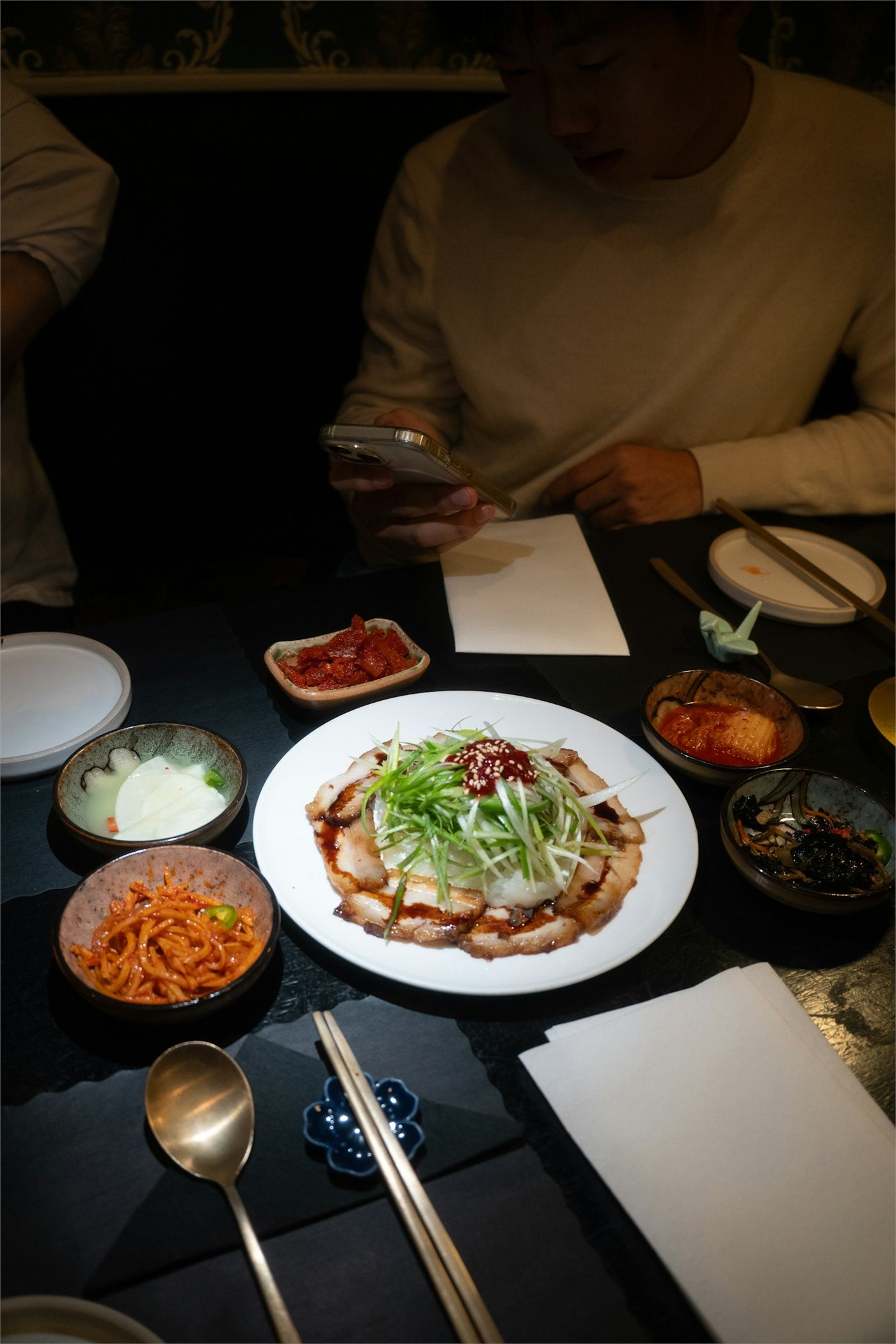
At a typical Korean meal, each person has rice and may have an individual bowl of soup. Banchan (반찬) are dishes eaten with rice and are commonly placed in the center for the table to share. Move between rice, soup, the main dish, and banchan in whatever combination tastes good; take modest portions and follow any serving cues at the restaurant.
The basic map of the table
The most useful way to read a Korean meal is to start with bap (밥), cooked rice. Rice is not merely another side; it is the quiet center that salty, fermented, grilled, and seasoned foods accompany. A bowl of guk (국) or another soup may sit beside it. Those two bowls are normally personal, while many other dishes occupy the shared space in the middle.
The full arrangement changes with the setting. A quick lunch may be one bowl with a few accompaniments. A baekban (백반) meal commonly brings rice, soup, and a selection of banchan. A barbecue table may be organized around the grill, lettuce, sauces, and vegetables. The number of plates does not indicate a test of etiquette; it shows how contrast is built across the meal.
- Usually personal: rice, an individual soup bowl, and your spoon and chopsticks.
- Usually shared: banchan, grilled items, pancakes, and dishes served on a central platter.
- Context-dependent: stews and hot pots may be individual portions or one pot for the group.
What counts as banchan
Translating banchan only as “side dishes” can make them sound optional. A better working idea is “dishes that accompany rice.” Kimchi is one familiar member, but the category can also include namul (seasoned vegetables), muchim (mixed or dressed ingredients), jorim (foods simmered in a seasoned liquid), jeon (pan-fried pieces or pancakes), pickles, tofu, fish, or small portions of meat.
Banchan are chosen to provide variation in temperature, texture, color, and seasoning. A cool crisp pickle may cut through a rich stew; a mild vegetable can reset the palate after a spicy bite. You do not need to eat every dish in a fixed order. Try a little, notice what works with the rice, and return to the combinations you enjoy.
Spoon, chopsticks, and an easy rhythm
The metal spoon has a central role at many Korean tables. It is useful for rice, soup, porridge, and mixing a bowl such as bibimbap. Chopsticks work well for pieces of banchan, noodles, grilled meat, and vegetables. There is no benefit in struggling with chopsticks when a spoon handles the food more comfortably.
A natural rhythm is to take a bite of rice, add a contrasting banchan, then taste the soup or main dish. With shared plates, take one bite-sized portion rather than moving a large amount to your own plate. At a formal or family table, notice what the host and other diners do; considerate observation matters more than performing a memorized ritual.
Refills and restaurant service
Many everyday restaurants replenish basic banchan, but the practice is not universal and premium or labor-intensive dishes may be limited. Some restaurants have a self-service station for water and refills; others use a call button or expect guests to ask a server. Look for signs, observe nearby tables, or ask before assuming that every plate is complimentary or unlimited.
The phrase banchan jom deo juseyo (반찬 좀 더 주세요) means “Please give us a little more banchan.” If only one item is needed, pointing politely is often clearer than trying to name it. Take only what the table expects to finish. Reducing leftovers is both courteous and easier on a busy kitchen.
Different meal formats, same underlying idea
A one-bowl dish such as bibimbap combines rice and toppings before you eat. Gukbap places rice and soup in the same serving or invites you to combine them. Hanjeongsik presents a broader sequence or spread of dishes, while barbecue turns cooking into a group activity. These formats look different, yet each still asks the diner to notice relationships among rice, seasoning, texture, and shared food.
Breakfast, home cooking, temple food, market meals, and contemporary tasting menus also have their own patterns. Avoid treating one restaurant table as the single authentic model. Korean food is a living cuisine, and the useful constant is not the number of banchan but the way multiple dishes form one meal together.
A first-table checklist
When the food arrives, identify your rice, your soup, the shared main dish, and two or three banchan you would like to try. Ask whether a bubbling pot is shared if it is not obvious. Keep raw-meat utensils away from cooked food at barbecue. Check ingredients when allergies, vegan needs, halal requirements, or other restrictions matter, because a vegetable-looking dish may contain broth or seafood seasoning.
Then stop analyzing and eat. Korean table culture is hospitable because it gives diners options: a mild bite can follow a strong one, and each person can assemble a different sequence from the same spread. Curiosity, small portions, and attention to the people sharing the table are enough for a good beginning.
Menu vocabulary
Key Korean terms
- Bap · 밥
- Cooked rice; also used broadly in expressions about having a meal.
- Banchan · 반찬
- Dishes eaten with rice, often shared at the center of the table.
- Guk · 국
- Soup, commonly served alongside rice.
- Baekban · 백반
- An everyday set-style meal centered on rice, soup, and banchan.
Sources and scope
References used for this guide
We wrote the explanatory text independently and used the following institutional references to verify cultural context, terminology, or practical claims. Links open the source publisher’s page.
- VISITKOREA: About Korean FoodKorea Tourism Organization
Meal-table structure, banchan, utensils, and restaurant context.
- The Roots of Hansik, Home-Cooked MealsKorean Food Promotion Institute
Bap, banchan, fermented seasonings, and home-meal context.
Recipes, menus, prices, and restaurant practices change. Confirm current ingredients directly when dietary, religious, or allergy requirements matter. Read our editorial policy.