Quick answer
What you need to know
Choose a meat everyone can eat, confirm the minimum order, and let one person or the staff manage the grill at a time. Cook raw meat thoroughly, separate raw-meat tongs from eating utensils, cut pieces on the grill if the restaurant does so, and build a ssam with one leaf, one bite of meat, a little sauce, and optional vegetables. Side dishes and wrap ingredients are meant to support the meat, not hide it.
Read the meat name before the marinade
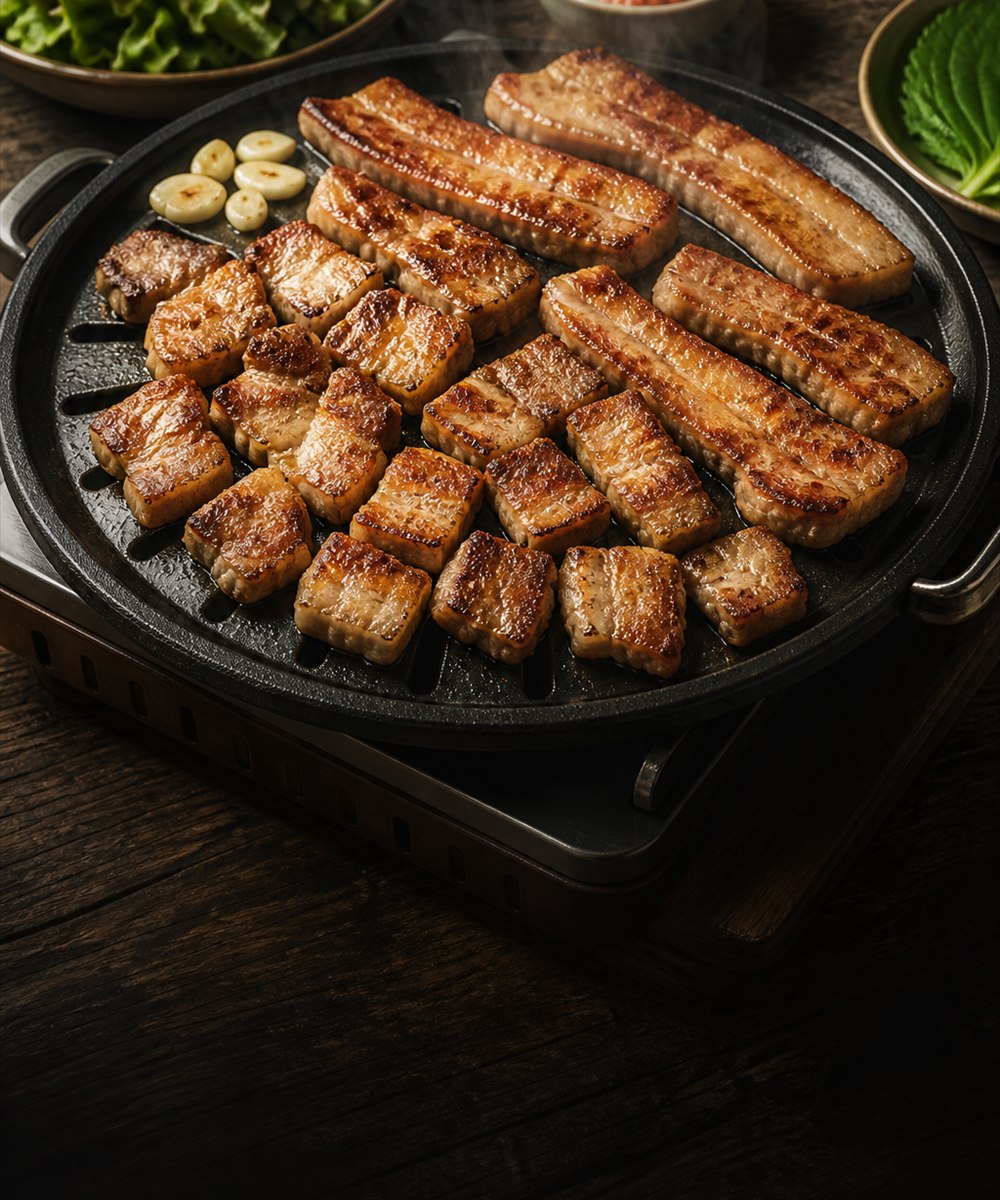
Samgyeopsal (삼겹살) is pork belly, usually served without a sweet marinade. Moksal (목살) is pork neck or shoulder. Galbi (갈비) means ribs and may be beef or pork; the menu should clarify. Bulgogi (불고기) is thinly sliced and commonly marinated, but preparation varies. Chadolbaegi (차돌박이) is thin beef brisket that cooks very quickly.
The first decision is therefore not “spicy or mild” but animal, cut, and seasoning. Plain cuts let diners adjust each bite with salt, sesame oil, ssamjang, or banchan. Marinated cuts arrive with a built-in sweet-savory profile and can scorch sooner because of sugar. If the table has religious, allergy, or dietary restrictions, confirm the marinade and grill-sharing practice before ordering.
Portions, minimums, and ordering as a group
Barbecue menus often list a weight and price per portion. Some restaurants require a minimum number of meat portions for the first order, even when fewer people are dining. That policy belongs to the restaurant rather than to Korean barbecue as a universal rule. Look for “2인분 이상” or ask how many servings are required.
For a mixed order, start with one or two cuts rather than filling the grill with every option. Plain meat is easiest before heavily marinated meat because sauce residue can burn. Additions such as mushrooms, kimchi, bean sprouts, or garlic may be cooked on designated areas of the grill, but follow the staff’s setup rather than assuming every banchan belongs over the heat.
Who cooks, and when is it done?
Service styles differ. At some restaurants the staff grills and cuts the meat; at others the table cooks. If a server begins managing the grill, let them set the pace. Otherwise, agree on one active cook so several sets of tongs are not moving the same pieces. Turn meat when the surface has browned and follow food-safety guidance appropriate to the cut.
Keep equipment roles clear. Raw-meat tongs or scissors should not become personal eating utensils, and cooked pieces should move to a clean area or plate. Never place cooked meat back on a plate that held it raw. These are ordinary food-safety measures, not ceremonial etiquette, and they matter more than mastering a stylish wrap.
Build a ssam that fits in one bite
Ssam (쌈) means a wrap. Place a lettuce or perilla leaf in your hand, add a bite-sized piece of meat, then a small dab of ssamjang. Garlic, chile, rice, scallion salad, or kimchi are options rather than a required checklist. Fold the leaf loosely and eat the wrap in one manageable bite.
Perilla is aromatic and not the same herb as shiso, though they are related. Ssamjang usually combines fermented soybean and chile pastes with aromatics and sesame components, so it may contain soy, wheat, and sesame. Raw garlic and fresh green chile can be intense; taste them separately before adding a full piece.
Banchan, dipping sauces, and pacing
Common accompaniments include kimchi, seasoned scallions, pickled radish, onion sauce, greens, and a simple salt-and-oil dip. Their purpose is contrast. A clean bite with salt shows the meat’s flavor; a pickle adds acidity; ssamjang adds fermented depth; a leaf adds freshness. Rotate combinations instead of building the tallest possible wrap every time.
The grill controls the pace. Do not cook the entire order so early that later bites become dry and cold, and do not leave a crowded grill unattended. Share the best-cooked pieces rather than quietly reserving them. If smoke or heat becomes uncomfortable, ask for ventilation help or a grill change.
How the meal usually finishes
Many groups add a starch or soup after the meat: naengmyeon, fried rice, doenjang-jjigae with rice, or another house specialty. This is not dessert; it shifts the meal from repeated grilled bites to a cooler, soupy, or grain-based ending. Order with remaining appetite in mind, since finishers are often full portions.
There is no requirement to drink alcohol, make elaborate toasts, or feed another person. A successful barbecue meal is simpler: choose an appropriate cut, keep raw and cooked tools separate, share the cooking labor, and use the table’s many condiments to discover which combinations you like.
Menu vocabulary
Key Korean terms
- Samgyeopsal · 삼겹살
- Pork belly, commonly grilled without a sweet marinade.
- Galbi · 갈비
- Ribs; check whether the menu means beef or pork.
- Ssam · 쌈
- A leaf wrap assembled around a bite of food.
- Ssamjang · 쌈장
- A thick seasoned paste served with wraps and grilled foods.
Sources and scope
References used for this guide
We wrote the explanatory text independently and used the following institutional references to verify cultural context, terminology, or practical claims. Links open the source publisher’s page.
- VISITKOREA: About Korean FoodKorea Tourism Organization
Ssam culture, restaurant service, table grills, and Korean meal context.
- The Roots of Hansik, Home-Cooked MealsKorean Food Promotion Institute
Banchan and fermented-seasoning context.
Recipes, menus, prices, and restaurant practices change. Confirm current ingredients directly when dietary, religious, or allergy requirements matter. Read our editorial policy.