At a glance
The short answer
Jang (장) is the broad Korean category for fermented sauces and pastes. Traditional soybean jang begins with meju, blocks of cooked and fermented soybeans. When meju ages in brine, the liquid can become ganjang and the solids can become doenjang; gochujang follows a different formulation that combines fermented soybean material with grain, chili, and other ingredients. Methods vary by household and producer, so jang is best understood as living knowledge rather than one fixed recipe.
One short word, several different condiments
Start by separating the family name from its members. Jang is the category. Ganjang (간장) is soy sauce, doenjang (된장) is a dense fermented soybean paste, and gochujang (고추장) is a fermented chili paste. Cheonggukjang (청국장) is another soybean preparation with its own rapid fermentation and distinctive aroma. Ssamjang, meanwhile, is commonly a seasoned mixture built for wraps rather than a simple synonym for doenjang.
The names matter because the condiments do different jobs. Ganjang can season a clear soup, a braise, a dipping sauce, or a vegetable side. Doenjang can anchor stew, season greens, or become part of a wrap sauce. Gochujang brings chile warmth, sweetness, salt, and fermented depth to mixtures such as bibimbap sauce. Calling every brown liquid “soy sauce” or every red paste “hot sauce” erases those choices.
Meju is a beginning, not a finished seasoning
In traditional soybean jang making, soybeans are cooked, crushed, formed into blocks called meju (메주), and dried and fermented before they meet brine. The exact calendar, environment, microorganisms, salt level, vessel, and handling practice can differ. That variation is not a defect in the idea of jang; it is one reason different households and regions can develop recognizable flavors.
UNESCO’s heritage record describes jang making as a complete body of knowledge that includes preparation, keeping, fermentation, aging, storage, and use. This framing is important. A jar is not culturally meaningful only because of its ingredients. Meaning also sits in knowing when to begin, how to watch the ferment, how to protect it, when to separate it, and how to carry its flavor into another year of meals.
How ganjang and doenjang can come from one process
A traditional pathway places prepared meju in salted water. Over time, the seasoned liquid and soybean solids develop together. The liquid may be separated and matured as ganjang; the solids may be mashed and aged as doenjang. This relationship explains why the two condiments can feel like different voices from a shared foundation—one pourable and precise, the other thick and earthy.
That description should not be treated as a universal factory diagram. Modern commercial products use varied recipes, processing methods, aging periods, grains, sweeteners, and flavor adjustments. Even products with the same English label can differ greatly in salt, aroma, thickness, and intended use. The ingredient list and producer description tell you more than color alone.
Why gochujang is not simply Korean hot sauce
Gochujang includes red chili, but heat is only one part of its profile. Fermented soybean material, grain or starch, salt, and sweet components help create a dense paste with savory, sweet, salty, and warm notes. Because it is concentrated, cooks often loosen or balance it with other ingredients rather than spooning the undiluted paste over everything.
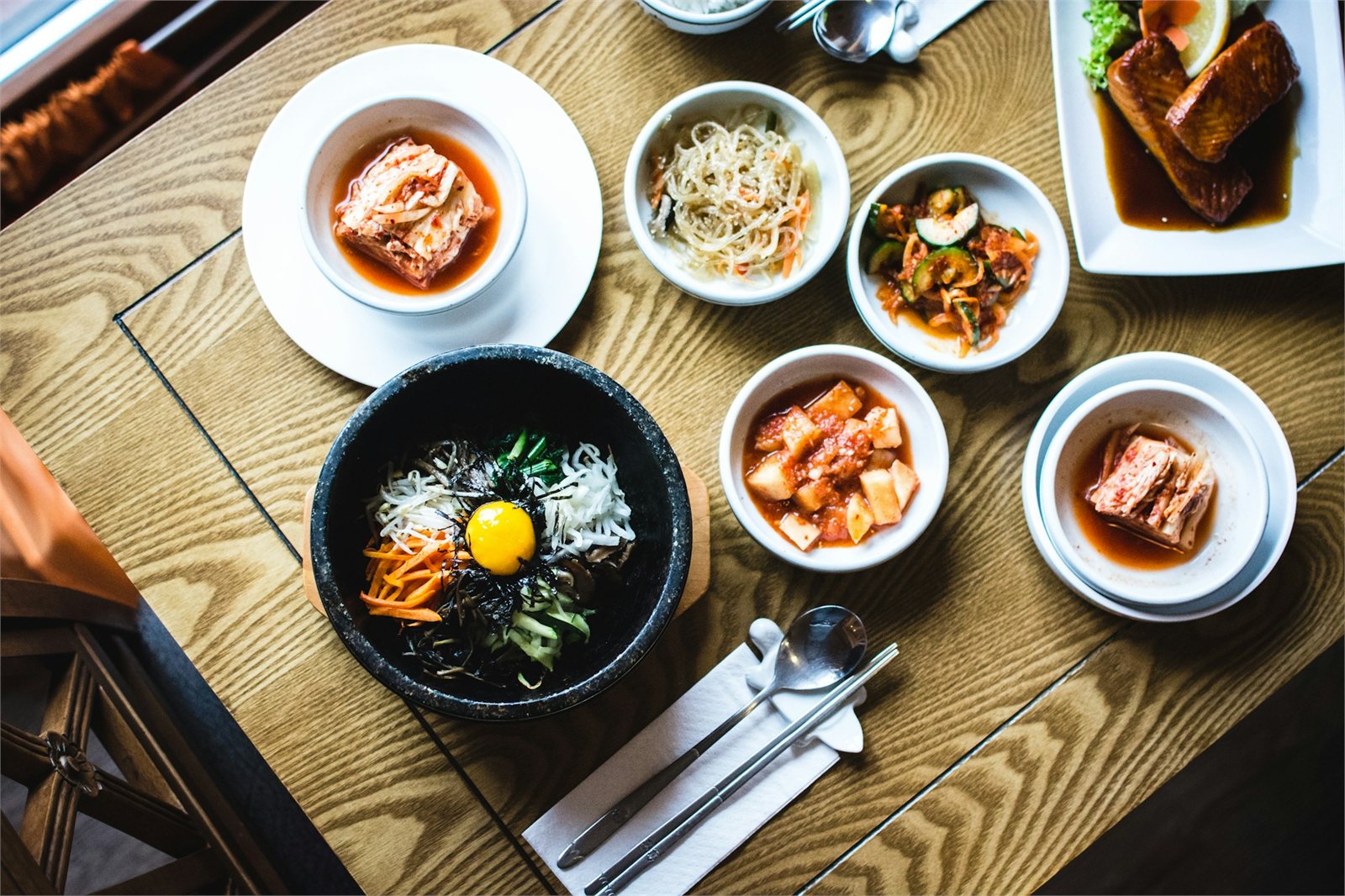
In bibimbap, gochujang may be mixed with sesame oil, vinegar, sweetener, or other seasonings, and the diner can add it gradually. In tteokbokki, it becomes part of a simmering sauce whose recipe may also include stock and sugar. In a marinade, its role changes again. The same tub participates in several dishes, but the final taste depends on proportion and context.
Jang organizes flavor across the whole table
The influence of jang is easiest to notice across a meal rather than in one spoonful. A little ganjang may sharpen a vegetable side; doenjang may deepen a broth; gochujang may sit beside rice; and a seasoned ssamjang may complete a lettuce wrap. Fermentation creates continuity while fresh leaves, grains, grilled surfaces, broth, sesame, garlic, and acidity keep the table from tasting uniform.
This is why “Does it contain soy sauce?” can be too narrow for an allergy or dietary conversation. Soy may appear through several forms of jang, and a paste may contain grain or other ingredients a diner did not expect. Ask about the exact dish and current product. Jang is a cultural system, but safety still depends on a particular kitchen and label.
A practical tasting method for first-time buyers
Buy one small container for a dish you already plan to cook. Taste a tiny amount by itself, then compare it after dilution in broth, dressing, or sauce. Notice salt first, then sweetness, acidity, aroma, chile warmth, and the length of the fermented finish. That sequence is more useful than asking whether a brand is generically “authentic.”
Read the Korean and English name together, confirm the product type, check storage directions, and refrigerate after opening when the label requires it. Do not assume that one spoon of a new brand equals one spoon of an old brand. Adjust slowly. The point of learning jang is not to chase maximum intensity; it is to understand how a concentrated seasoning creates proportion across a meal.
- For soup: dissolve a small amount first, taste the broth, and add gradually.
- For bibimbap: serve sauce separately so each diner controls heat and salt.
- For wraps: distinguish plain doenjang from a prepared ssamjang mixture.
- For dietary needs: read the complete current label and ask about shared preparation.
Words to recognize
Korean terms in this story
- Jang · 장
- The broad family of Korean fermented sauces and pastes.
- Meju · 메주
- Cooked soybean blocks prepared and fermented as a foundation for traditional soybean jang.
- Ganjang · 간장
- Korean soy sauce; styles and intended uses vary.
- Doenjang · 된장
- A dense, savory fermented soybean paste.
- Gochujang · 고추장
- A fermented red chili paste with savory, salty, sweet, and warm elements.
Sources and editorial scope
References behind the story
The explanatory text is original to Korean Food Guide. These institutional records were used to verify cultural context, terminology, dates, or practical claims.
- Knowledge, beliefs and practices related to jang making in the Republic of KoreaUNESCO
Primary heritage record for jang making, household transmission, fermentation, storage, and use; inscribed in 2024.
- Making soybean paste becomes a national heritage itemKorea.net
Government-published explanation of meju and the connected traditional production of ganjang and doenjang.
- Sauce master explains UNESCO-recognized fermented pasteKorea.net
Contemporary account of jang aging, earthenware storage, and household or producer variation.
Food traditions and recipes vary by household, region, producer, and restaurant. Confirm current ingredients directly when dietary, religious, or allergy requirements matter. Read our editorial policy.