At a glance
The short answer
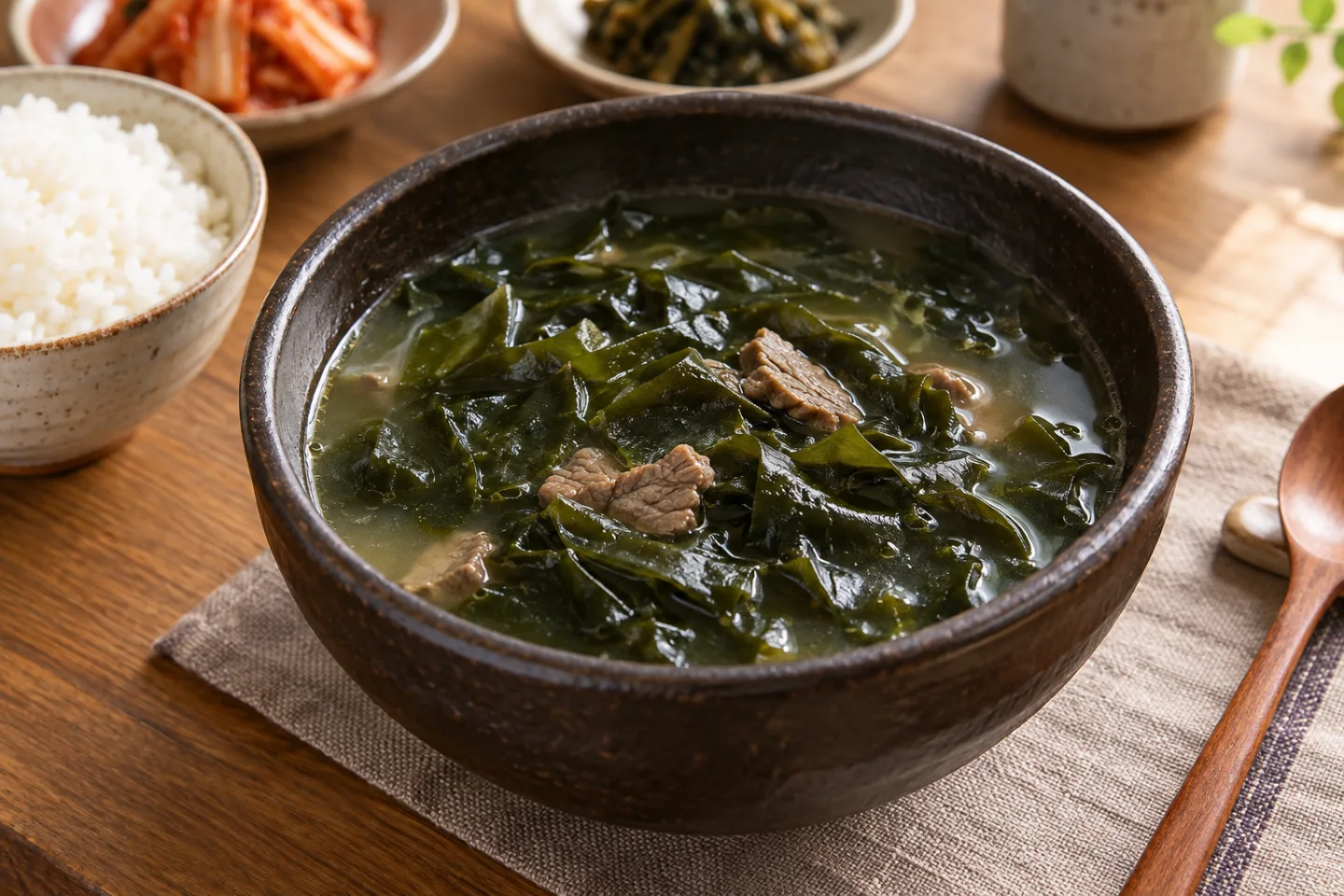
Miyeokguk (미역국) is Korean seaweed soup. It is widely eaten on birthdays because seaweed soup has long been associated with food given to mothers after childbirth. Serving it each year remembers one’s birth and can express gratitude for maternal care. Beef is common, but coastal and household versions may use clams, mussels, white fish, or other broths. The name alone does not identify the broth, so vegetarian, halal, allergy, soy, or sesame needs should be checked directly.
The custom begins with care after childbirth
Institutional accounts of Korean food culture connect miyeokguk first with postpartum care. Seaweed soup has long been prepared for women after giving birth, and Korea.net’s recipe archive describes it as the first food traditionally served to a new mother. A recent National Folk Museum of Korea exhibition likewise presented a simple bowl of miyeokguk as part of Korea’s history of childbirth and collective care.
This history should be read as cultural practice, not as universal medical advice. Contemporary recovery needs differ, and seaweed can contain substantial iodine. A traditional food can carry comfort and continuity while individual nutrition or thyroid questions still belong with a qualified health professional. The reliable claim is the custom itself: miyeokguk has a durable place in Korean postpartum food culture.
Eating it on a birthday turns attention toward birth
The birthday custom folds that postpartum association back into the life of the child. Korea.net explains the bowl as a reminder of a mother’s love and effort, while VISITKOREA describes it as a symbolic dish that honors the pain and sacrifice connected with childbirth. The birthday meal therefore looks in two directions: it celebrates the person who was born and remembers the care surrounding that birth.
The meaning can survive changes in family form. A friend can cook the soup, an adult can make it for a parent, and a person living abroad can use a packaged or simplified version to mark the day. The gesture does not require a perfect reenactment of one household recipe. What matters is that a common soup has become a language of remembrance and care.
One name covers many household and regional bowls
A widely recognized version combines soaked miyeok with beef, sesame oil, soup soy sauce, and water or broth. Yet that is not the only legitimate bowl. VISITKOREA notes that coastal cooks may add clams or white-fleshed fish, and Korea.net also mentions mussels and abalone. The broth may be light and clean or simmered longer until the seaweed becomes exceptionally soft.
Households also differ in how they cut the seaweed, whether they sauté it before adding liquid, how strongly they season the broth, and which protein they prefer. Meatless versions can be built with water, mushrooms, kelp, or vegetable stock, but they should be described by their actual ingredients rather than assumed from the word “seaweed.” A restaurant miyeokguk may still contain beef, anchovy, shellfish, or fish sauce.
The flavor comes from sequence more than decoration
Dried miyeok expands dramatically when soaked, so a small dry portion becomes a generous amount of seaweed. In many home methods, beef and seaweed are gently sautéed with sesame oil before water is added. Simmering softens the leaves and lets the broth take on a rounded marine savoriness. Gukganjang, a concentrated soy sauce used for soups, can season without making the liquid as dark as an all-purpose soy sauce might.
The finished soup is usually restrained rather than heavily garnished. Rice beside the bowl makes the meal complete, and kimchi may add acidity and heat. Because the soup is familiar home food, richness is not the only measure of success. A clear version with tender seaweed can carry as much emotional weight as a pot filled with premium seafood.
How to order or serve it with fewer surprises
On an English menu, miyeokguk may appear as “seaweed soup,” “brown seaweed soup,” or “sea mustard soup.” Those translations identify the plant but not the stock. Ask what makes the broth and whether beef, anchovy, shellfish, soy sauce, sesame oil, or garlic is used. People with shellfish, soy, sesame, or fish allergies should also ask about shared cookware and premade stock.
If you are serving the soup for someone’s birthday, the gesture matters more than claiming one definitive recipe. Learn the recipient’s preferences, explain the custom without turning it into a rule, and serve rice and a few compatible banchan alongside it. A thoughtful bowl communicates what the tradition has always emphasized: this person’s arrival is worth remembering.
- For vegetarian or vegan needs, confirm the broth rather than relying on the visible seaweed.
- For allergies, check beef, anchovy, shellfish, soy, sesame, and shared preparation.
- For a first taste, try the broth and seaweed together before adding rice or extra seasoning.
- For a birthday, a simple homemade or carefully chosen restaurant bowl is enough to carry the meaning.
Words to recognize
Korean terms in this story
- Miyeokguk · 미역국
- Soup made with miyeok seaweed; widely associated with birthdays and postpartum care in Korea.
- Miyeok · 미역
- An edible brown seaweed often translated as sea mustard or wakame.
- Saengil · 생일
- Birthday.
- Sanhu jori · 산후조리
- Postpartum rest and recovery care.
- Gukganjang · 국간장
- A salty, concentrated Korean soy sauce traditionally used to season soups.
Sources and editorial scope
References behind the story
The explanatory text is original to Korean Food Guide. These institutional records were used to verify cultural context, terminology, dates, or practical claims.
- Korean recipe: Miyeokguk seaweed soupKorea.net
Government recipe archive documenting birthday and postpartum associations, a beef version, and ingredient variations.
- Seaweed Soup (Miyeokguk)Korea Tourism Organization
Concise visitor reference for the birthday custom and coastal beef, clam, and white-fish variations.
- The Story Behind K-Food in K-ContentKorea Tourism Organization
Current cultural explanation of miyeokguk as birthday food, maternal remembrance, and home cooking.
- Exhibition of traditional childbirth cultureKorea.net
National Folk Museum exhibition context for miyeokguk within Korea’s long history of postpartum care.
Food traditions and recipes vary by household, region, producer, and restaurant. Confirm current ingredients directly when dietary, religious, or allergy requirements matter. Read our editorial policy.