Quick answer
What you need to know
Bibimbap (비빔밥) is rice topped with individually prepared ingredients—often seasoned vegetables, egg, and meat—then mixed before eating. Add gochujang gradually rather than emptying the whole sauce container at once. Dolsot-bibimbap arrives in a hot stone bowl and develops crisp rice at the bottom; sanchae, Jeonju, seafood, and other versions change the toppings and regional emphasis.
The name gives the eating instruction
Bibim (비빔) refers to mixing, and bap (밥) is cooked rice. The ingredients are arranged separately so their colors and shapes are visible when the bowl arrives, but the dish is intended to be combined. A spoon is usually the easiest tool: cut the egg if needed, distribute sauce, and fold from the bottom until rice and toppings are evenly coated.
Mixing does not mean crushing everything into a paste. The pleasure comes from keeping the chew of rice, tenderness of vegetables, richness of egg, and other textures while spreading seasoning through the bowl. If a small bowl of soup is served, it can be sipped separately rather than poured into the bibimbap unless the restaurant suggests otherwise.
The components are prepared before they meet
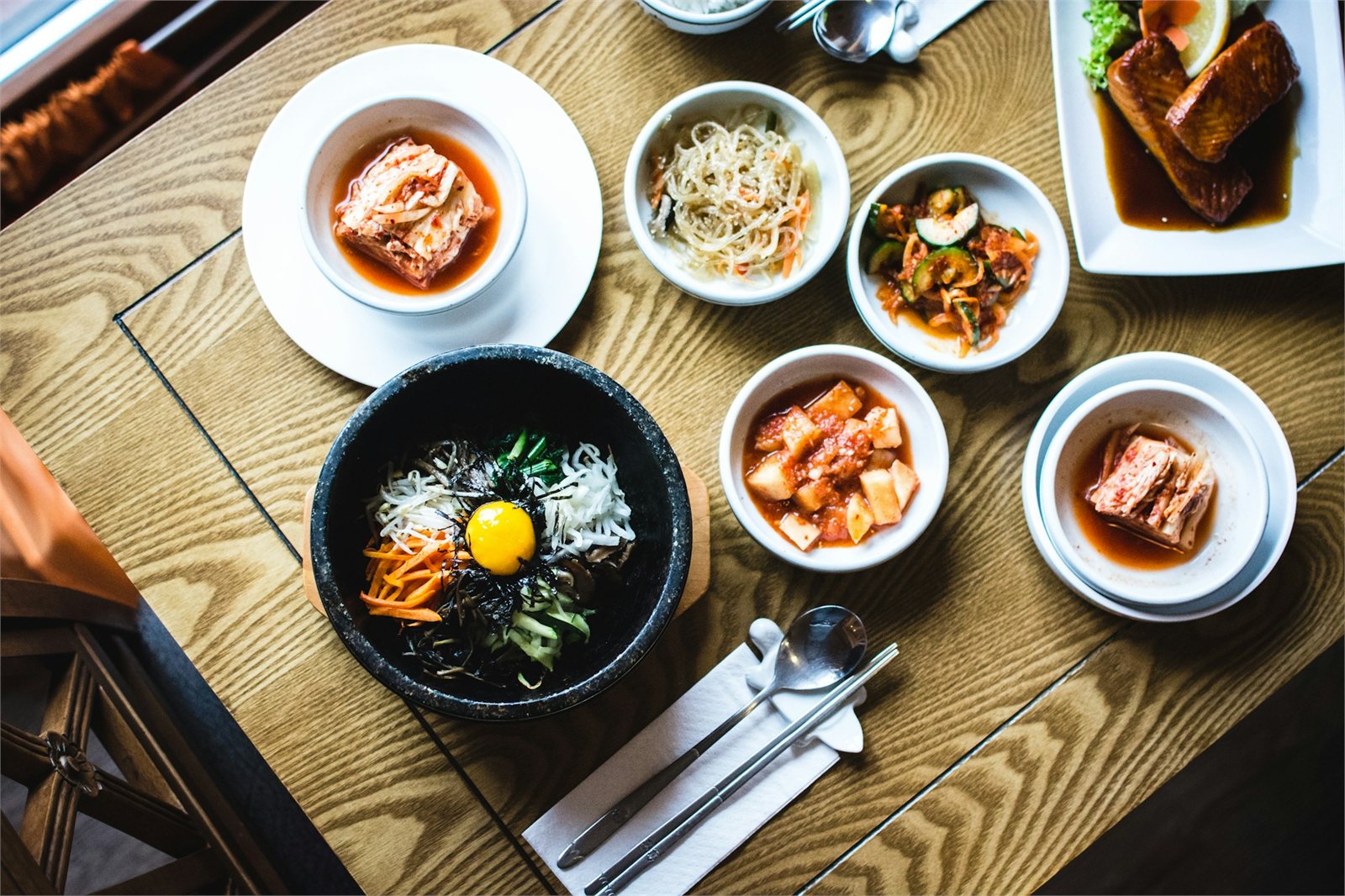
Common toppings include namul such as spinach, bean sprouts, fernbrake, mushrooms, zucchini, carrot, or bellflower root. Each may be blanched, sautéed, or seasoned on its own. Beef and a fried or raw egg yolk are frequent additions but not defining requirements. Sesame oil contributes aroma, while gochujang or a seasoned sauce binds the bowl.
That separate preparation is important. A good bowl offers contrast instead of one undifferentiated vegetable mixture. Seasonal and regional ingredients can replace the familiar set, which makes bibimbap a flexible format rather than a fixed recipe. The Korea Tourism Organization describes the variety of local seasonal ingredients as part of the dish’s appeal.
Control the sauce before the sauce controls the bowl
Restaurants may place gochujang in the bowl, serve it on the side, or provide a squeeze bottle. Start with less than you think you need, mix thoroughly, and taste. The toppings are already seasoned, and the paste adds salt, sweetness, fermentation, and heat together. More sauce cannot easily be removed.
Some versions use a soy-based sauce instead of or alongside gochujang. This can be milder in chile heat but is not necessarily lower in sodium and may contain wheat. A sauce labeled “not spicy” can still be unsuitable for specific allergies or dietary restrictions, so treat heat and ingredients as two separate questions.
Dolsot changes the texture
Dolsot-bibimbap (돌솥비빔밥) is served in a heated stone bowl. The vessel keeps the meal hot and creates nurungji-like crisp rice where grains contact the surface. The bowl can remain dangerously hot after it reaches the table; touch only the eating utensils and any protected support supplied by the restaurant.
Let the rice sit briefly if you want a stronger crust, then mix while listening for the sizzle. Because the hot bowl continues cooking the egg and toppings, its flavor and texture differ from regular bibimbap even when the ingredient list is similar. Diners who prefer a cooler, softer bowl should order the standard version.
Regional and ingredient-led versions
Jeonju bibimbap is a celebrated regional expression associated with Jeonju’s food culture and generous garnishes. Sanchae-bibimbap (산채비빔밥) emphasizes mountain vegetables. Other menus may offer seafood, raw beef, cooked meat, sprouts, barley, or a restaurant-specific seasonal bowl. A modifier in front of bibimbap usually tells you what leads the variation.
Raw-beef yukhoe-bibimbap and raw-fish hoe-deopbap have different safety considerations from a vegetable bowl. Order them only when you intentionally want raw ingredients and the restaurant is appropriate for that preparation. The familiar word bibimbap should not cause you to skip reading the rest of the dish name.
Vegetarian, vegan, and allergen adjustments
Bibimbap can often be adjusted, but it is not vegetarian by default. Meat may be mixed among the toppings, the egg may be prominent, vegetables may be seasoned with fish or meat ingredients, and the sauce may contain allergens. Ask to omit meat and egg, then separately confirm the sauce and vegetable seasonings if strict avoidance matters.
Common concerns include soy, wheat, sesame, egg, and possible seafood-derived seasoning. A hot stone bowl or shared prep area may limit cross-contact control. For a severe allergy, a casual customization request is not enough; explain the allergy clearly and choose another restaurant if the staff cannot confirm ingredients and preparation.
Menu vocabulary
Key Korean terms
- Bibim · 비빔
- Mixed; used in the names of several mixed dishes.
- Bap · 밥
- Cooked rice.
- Dolsot · 돌솥
- A heated stone bowl that keeps food hot and crisps the rice.
- Namul · 나물
- Vegetable or plant dishes, often blanched or seasoned.
Sources and scope
References used for this guide
We wrote the explanatory text independently and used the following institutional references to verify cultural context, terminology, or practical claims. Links open the source publisher’s page.
- VISITKOREA: BibimbapKorea Tourism Organization
Core components and role of seasonal local ingredients.
- Jeonju, a Slow City of Hanok and SerenityKorea Tourism Organization
Jeonju bibimbap and regional food context.
Recipes, menus, prices, and restaurant practices change. Confirm current ingredients directly when dietary, religious, or allergy requirements matter. Read our editorial policy.