Quick answer
What you need to know
Guksu and myeon both signal noodles. Mul usually points to a broth version; bibim signals mixing, often with a spicy sauce. Naengmyeon is a cold noodle category, kalguksu uses knife-cut wheat noodles, and japchae uses sweet-potato starch noodles. Tteok (떡) means rice cake broadly: tteokbokki is a sauced savory snack, while tteokguk is rice-cake soup.
Decode the words around guksu and myeon
Guksu (국수) and myeon (면) are both used for noodles. The modifier usually tells you temperature, sauce, ingredient, or method. Bibim-guksu is mixed with a seasoned sauce rather than served as a large broth. Mul-naengmyeon comes in cold broth, while bibim-naengmyeon is mixed with a red sauce. Janchi-guksu is a warm, light noodle soup associated with celebratory hospitality.
Restaurant English may translate two distinct Korean names as “spicy noodles,” so compare the Hangul or romanized name when available. Bibim does not guarantee the same sauce across dishes, and mul does not tell you whether the broth contains beef, anchovy, or another base.
Naengmyeon is cold by design
Naengmyeon (냉면) is served cold, commonly with long, resilient noodles made from buckwheat and starches in varying proportions. Mul-naengmyeon emphasizes chilled broth; bibim-naengmyeon emphasizes a spicy mixed sauce. Scissors may be offered because the noodles are intentionally long and chewy. Cut once or twice if needed rather than reducing them to tiny pieces.
Mustard and vinegar may be available at the table. Taste the original broth or sauce first, then add a little. Recipes and regional lineages vary, and packaged noodles may include wheat or other starches even when buckwheat appears in the description. Anyone avoiding gluten should verify the exact product and broth instead of relying on “buckwheat noodles” as a guarantee.
Kalguksu, japchae, and ramyeon occupy different worlds
Kalguksu (칼국수) means knife-cut noodles and usually describes soft wheat noodles in a warm broth. The broth may feature anchovy, clams, chicken, perilla seed, or other house choices. It is comforting and often mild in chile, but neither its pale color nor vegetable garnish establishes a vegetarian base.
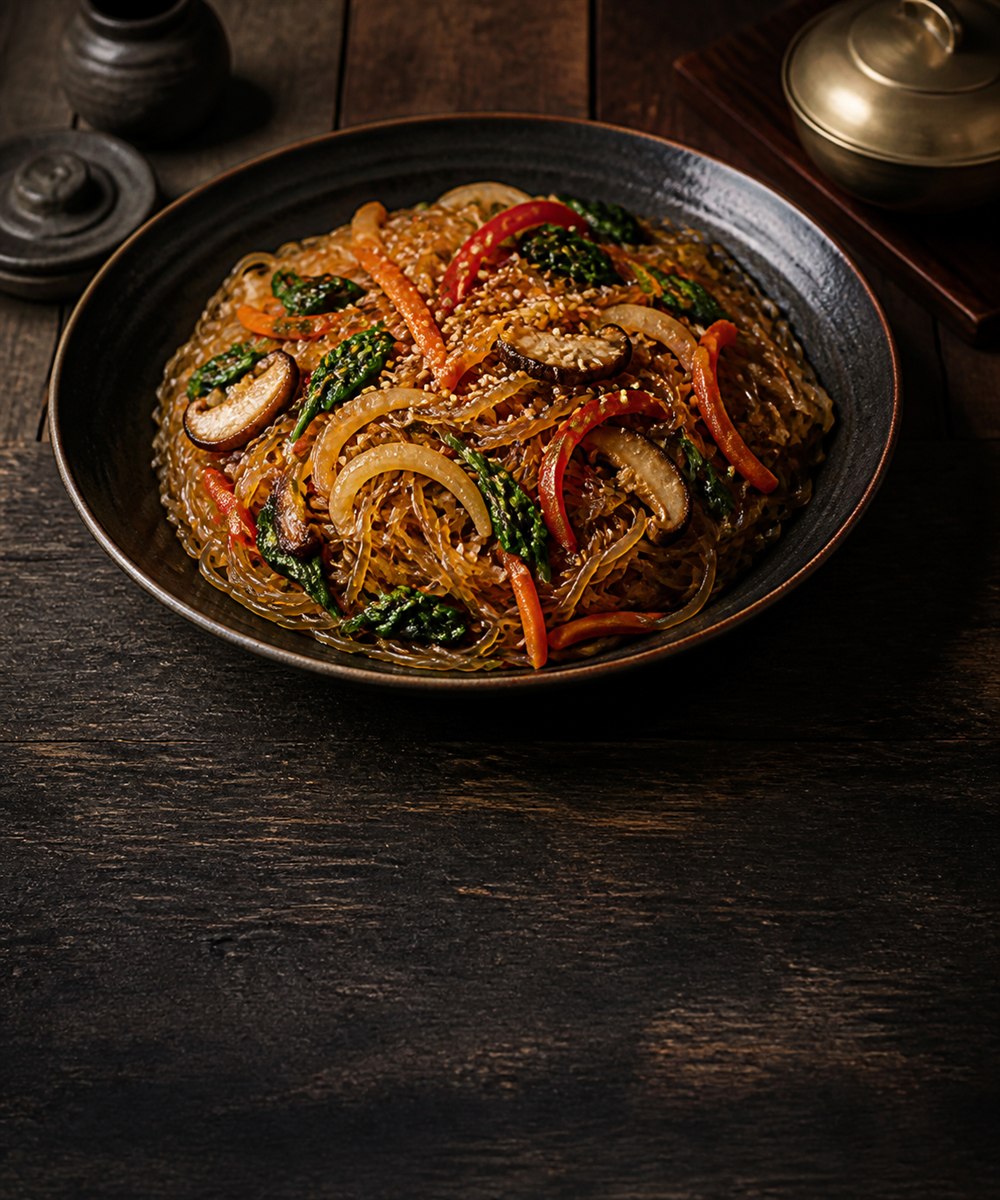
Japchae (잡채) is not a soup. Its springy noodles are commonly made from sweet-potato starch and tossed with vegetables, soy-based seasoning, sesame oil, and sometimes meat. Ramyeon (라면) refers to Korean instant-style noodles served in many forms, from a simple convenience meal to restaurant pots with egg, seafood, dumplings, cheese, or processed meat.
Tteok is a family, not one cylindrical rice cake
Tteok (떡) broadly means Korean rice cake, although grains, shapes, fillings, and methods vary. Garaetteok is a long cylindrical rice cake that can be sliced into oval pieces for soup or cut into shorter lengths for tteokbokki. Songpyeon are filled half-moon rice cakes associated with Chuseok. Injeolmi is a soft pounded rice cake commonly coated with soybean powder.
Texture is central. Fresh rice cake can be tender and elastic; chilled rice cake firms; simmering softens it again. Chewy does not mean undercooked. Take small bites, especially with thick or sticky pieces, and supervise children or anyone who has difficulty chewing or swallowing.
Tteokbokki and the bunsik table
Tteokbokki (떡볶이) usually combines cylindrical rice cakes with a glossy chile-paste sauce. Fish cake, cabbage, scallion, egg, dumplings, or noodles may join the pan. Gungjung-tteokbokki is a soy-seasoned, non-red royal-court-style variation often made with beef and vegetables. Rose tteokbokki is a contemporary creamy variation and commonly contains dairy.
At a bunsik shop, tteokbokki is frequently ordered with gimbap, twigim, eomuk, or sundae. Dipping a fried item into the sauce is popular but optional. “Rice cake” does not mean the whole dish is gluten-free: sauce, fish cake, dumplings, and shared preparation can introduce wheat, soy, seafood, or other allergens.
Menu vocabulary
Key Korean terms
- Guksu · 국수
- Noodles or a noodle dish.
- Myeon · 면
- Noodles; frequently used as the final element of a dish name.
- Bibim · 비빔
- Mixed, commonly with a seasoned sauce.
- Naeng · 냉
- Cold.
- Tteok · 떡
- Korean rice cake as a broad category.
Sources and scope
References used for this guide
We wrote the explanatory text independently and used the following institutional references to verify cultural context, terminology, or practical claims. Links open the source publisher’s page.
- VISITKOREA: Bunsik & Street FoodKorea Tourism Organization
Bunsik context and representative foods such as tteokbokki, gimbap, sundae, and fish cake.
- Seven Korean Summer FoodsKorea Tourism Organization
Contemporary context for cold noodle dishes and ingredient checks.
Recipes, menus, prices, and restaurant practices change. Confirm current ingredients directly when dietary, religious, or allergy requirements matter. Read our editorial policy.