Quick answer
What you need to know
Read from the end first. The final element often tells you the format: -bap is rice, -guk or -tang is soup, -jjigae is stew, -gui is grilled, -bokkeum is stir-fried, -jorim is simmered or braised, -jjim is steamed or braised, -jeon is pan-fried, and -muchim is mixed or dressed. Then read the first element for the main ingredient, region, or seasoning.
Begin at the end of the name
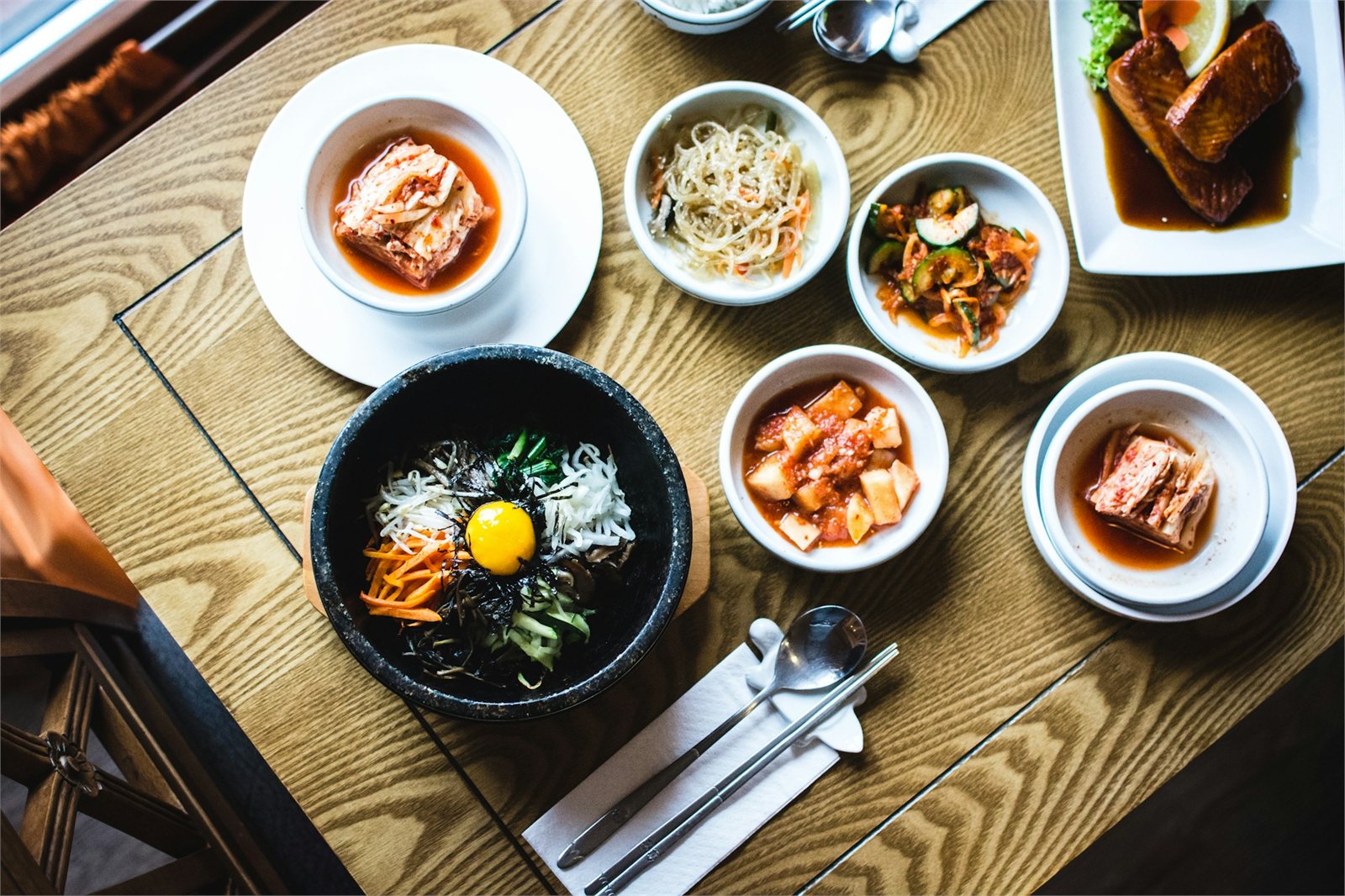
In many compound dish names, the final word supplies the category. Kimchi-jjigae is a jjigae built around kimchi. Dak-galbi uses dak, chicken, in a dish with a conventional name that should not be decoded too literally as ribs. Dolsot-bibimbap tells you the bibimbap arrives in a stone pot. The pattern is powerful, but established names still have histories that resist word-for-word translation.
Use decoding to narrow the question, not to claim certainty. If you recognize jjigae, you know to expect a stew-like rice companion, but you still do not know the stock, protein, heat, portion, or allergens. The menu description and staff answer complete the picture.
Rice, porridge, noodles, and soup endings
Bap (밥) is cooked rice and appears in bibimbap, fried rice names ending in bokkeumbap, and ingredient-led rice dishes. Juk (죽) is porridge. Guksu (국수) and myeon (면) indicate noodles. Guk (국) and tang (탕) point toward soup, while gukbap (국밥) joins soup and rice. Jeongol (전골) identifies a composed hot pot.
These endings help estimate how the food will arrive. Juk and gukbap are usually bowl-centered meals. Jeongol more often signals sharing and tabletop heat. Myeon can be hot, cold, brothy, or mixed, so look for modifiers such as mul, bibim, naeng, or the named broth ingredient.
Cooking-method endings
Gui (구이) is grilled or roasted food. Bokkeum (볶음) indicates stir-frying, while bokkeumbap is fried rice. Jorim (조림) describes ingredients simmered in a seasoned liquid until concentrated. Jjim (찜) covers steamed or slowly cooked dishes and can include substantial braised preparations. Jeon (전) identifies pan-fried battered or egg-coated pieces and pancakes.
Muchim (무침) means mixed or dressed, often used for vegetables, seafood, or noodles seasoned just before serving. Twigim (튀김) means fried food. Hoe (회) indicates raw sliced fish or another raw preparation in many menu contexts. Because preparation conventions vary, diners avoiding raw food or alcohol-containing marinades should confirm instead of depending on the English category alone.
Ingredient words that frequently lead
So (소) or sogogi (소고기) indicates beef; dwaeji (돼지) or dwaejigogi (돼지고기) indicates pork; dak (닭) indicates chicken; saengseon (생선) means fish; haemul (해물) means seafood; saeu (새우) is shrimp; dubu (두부) is tofu; beoseot (버섯) is mushroom; and kimchi remains kimchi. A familiar lead word does not exclude other ingredients.
Doenjang, gochujang, ganjang, and kimchi at the beginning often identify the dominant seasoning or base. Maeun (매운) means spicy, but a dish can be spicy without advertising the adjective. Saeng (생) can imply fresh or raw depending on context. Treat words as clues that help you form a precise follow-up question.
Place names and style words
Jeonju, Andong, Chuncheon, Busan, Jeju, and other place names may identify an origin, a celebrated association, or a restaurant style. Sanchae points to mountain vegetables. Gungjung refers to royal-court style in names such as gungjung-tteokbokki. Dolsot names the heated stone vessel. Mul means water or broth in combinations such as mul-naengmyeon, while bibim signals mixing.
A regional label does not guarantee protected origin or one standardized recipe. Ask what distinguishes the house version. The answer may be a grain, broth, garnish, cooking vessel, local ingredient, or serving tradition rather than an entirely different dish.
A five-step decoding routine
First, find the final category word. Second, identify the leading ingredient or place. Third, look for a heat or serving modifier. Fourth, decide whether the likely format is individual or shared. Fifth, ask about what the name leaves hidden: broth, sauce, garnish, portion, raw ingredients, and allergens.
For example, haemul-pajeon combines seafood, scallion, and jeon: expect a shared pan-fried pancake, then ask which seafood and what the batter contains. Doenjang-jjigae combines soybean paste and stew: expect a strong rice companion, then ask whether the broth or solids contain anchovy, shellfish, or meat. Ten useful building blocks can unlock more menus than ten memorized photographs.
Menu vocabulary
Key Korean terms
- -gui · -구이
- Grilled or roasted.
- -bokkeum · -볶음
- Stir-fried.
- -jorim · -조림
- Simmered or braised in a seasoned liquid.
- -jjim · -찜
- Steamed or slowly cooked; may refer to a substantial braise.
- -jeon · -전
- Pan-fried battered or egg-coated pieces, or a pancake.
- -muchim · -무침
- Mixed or dressed with seasoning.
Sources and scope
References used for this guide
We wrote the explanatory text independently and used the following institutional references to verify cultural context, terminology, or practical claims. Links open the source publisher’s page.
- National Institute of Korean Language: English portalNational Institute of Korean Language
Institutional language portal and access point for Korean–foreign-language learner dictionaries.
- Standard Romanization and Translation of 200 Korean FoodsNational Institute of Korean Language
Official romanization and translation reference for major dish names.
Recipes, menus, prices, and restaurant practices change. Confirm current ingredients directly when dietary, religious, or allergy requirements matter. Read our editorial policy.