Quick answer
What you need to know
For a sit-down breakfast, consider rice with soup and banchan, a bowl of juk (rice porridge), or a soup restaurant that is actually open early. For a short morning, look for a takeaway such as gimbap or bread and check the filling. There is no compulsory Korean breakfast menu. Confirm current opening hours, portion size, broth, toppings, and dietary needs before ordering.
Begin with the morning you actually have
Before choosing a dish, choose a format. A traveler leaving for a train needs a different breakfast from someone with an unhurried morning near a market. Decide whether you want a seat, a hot bowl, or something portable. Check the route as well as the restaurant: a detour for a famous meal may be less useful than a simple breakfast close to your departure point.
Do not assume a restaurant opens for breakfast because its food looks suitable for the morning. Use its current listing, the sign on the door, or a direct question. Opening hours, last orders, and rest days change. This guide deliberately avoids promising a particular shop, fixed price, or universal serving time; it helps you select among places that are open when you need them.
A rice table is a meal structure, not a special breakfast set
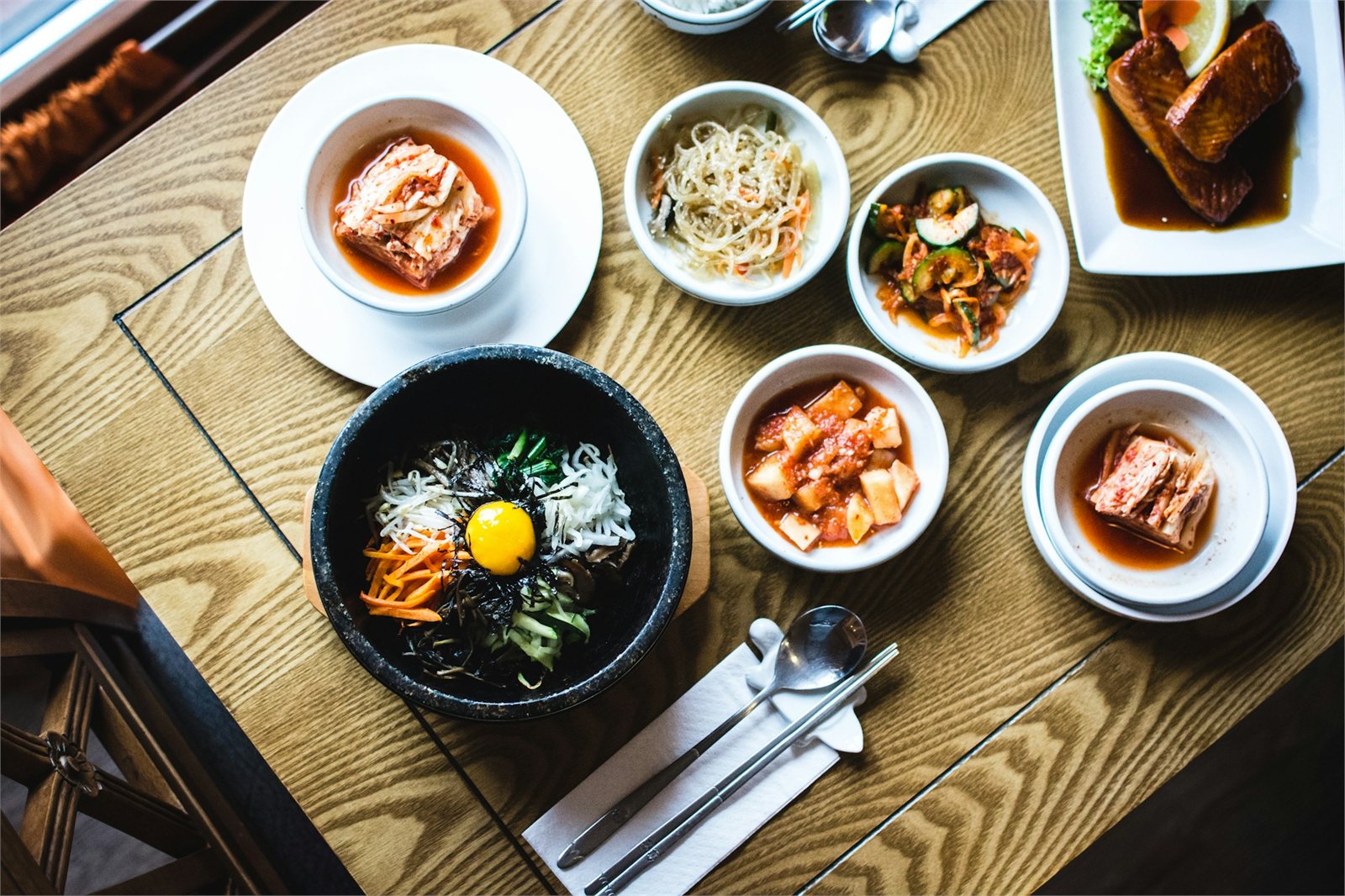
Rice, soup, and accompanying dishes offer one useful way to understand a Korean morning meal. Bap is cooked rice, while banchan are the accompanying dishes. The same basic arrangement also appears at other meals. What changes is the household, the available ingredients, and how much cooking or reheating fits the morning. It is misleading to treat a large photographed spread as what every person eats before work.
When choosing a set meal, ask what comes with the order rather than relying on the photograph. Does each diner receive rice? Is the soup personal or shared? Are the side dishes included? A modest set can be easier to navigate than ordering several mains. Start with the rice and a little of each accompaniment, then decide which combinations you enjoy instead of trying to finish every plate in a prescribed sequence.
Juk: choose the contents, not only the texture
Juk (죽) is porridge. Rice is cooked with liquid until it becomes soft, but the finished dish depends on the added ingredients. The Korea Tourism Organization describes beef-and-vegetable rice porridge as containing small pieces of beef and vegetables, and notes that anchovy broth may be used. That is a good reminder that a pale, smooth bowl is not automatically vegetarian.
Use the full name when ordering. A mushroom or vegetable description may identify the visible topping without telling you about the stock or finishing oil. Ask what is in the base and what arrives separately. If you prefer less seasoning, ask whether a condiment can be served on the side; the answer depends on whether the kitchen has already mixed it into the bowl. Choose porridge for a texture you like, not because a menu promises a cure or because this guide can determine a medically appropriate diet.
Soup for breakfast: understand the bowl before seasoning
Seolleongtang (설렁탕) is an ox-bone soup associated with a cloudy broth. It can be accompanied by rice and condiments. The VISITKOREA account of the dish explains the use of salt, scallions, and pepper at the table. Taste a spoonful first and add a little at a time if those seasonings are provided. Pale color does not mean the soup contains dairy, and it does not prove the absence of any allergen.
A soup restaurant can make a practical early meal when its hours fit your plan. Ask whether rice is included and whether it arrives in the soup or beside it. Haejangguk is a name commonly translated as hangover soup, but the name is not a health guarantee and does not specify every ingredient. Do not order solely by a familiar English translation if meat type, blood, seafood, or broth matters to you. Ask for the house version.
A portable morning has a different checklist
A takeaway breakfast is easier when you inspect the filling, packaging, and preparation instructions before paying. Gimbap offers rice wrapped in seaweed, but the fillings are not standardized. Bread, sandwiches, and packaged meals likewise require a product-specific ingredient check. A dish name or front-of-pack picture cannot tell you everything used in the sauce, seasoning, or preparation.
For a journey, choose food you can eat comfortably where eating is permitted. Ask whether it needs heating, request utensils if necessary, and follow any storage instructions. Keep packaging with the food until you have checked it. Avoid treating unrefrigerated travel time as harmless simply because a meal is portable. When storage or freshness is uncertain, the useful decision is a different meal, not an improvised safety rule.
Three morning plans to adapt, not copy blindly
With time for a seat, find an open rice-and-soup or porridge restaurant, confirm one serving and the ingredients, and eat before continuing your day. With only a short stop, choose a nearby takeaway, inspect the filling and heating instructions, and bring only what you expect to finish. With a group, compare each person’s needs before ordering a shared spread; the most adventurous diner should not decide everyone’s breakfast.
A useful question is achim siksa doenayo (아침 식사 되나요), meaning “Do you serve breakfast?” Pointing to the dish and confirming ingredients may be clearer than reciting a long unfamiliar phrase. For a serious allergy, use a professionally prepared allergy card and speak directly to the food provider; language examples are not a safety guarantee. Notice how the meal works, but leave room for individual habits. Breakfast tells you about a particular morning, not a rule that every Korean household follows.
Menu vocabulary
Key Korean terms
- Achim siksa · 아침 식사
- Breakfast or the morning meal.
- Juk · 죽
- Porridge; identify its ingredients and broth from the full menu name and provider.
- Seolleongtang · 설렁탕
- Ox-bone soup with a cloudy broth; serving and seasoning practices vary.
- Pojang · 포장
- Takeaway packaging; ask whether takeaway is available for the dish.
Sources and scope
References used for this guide
We wrote the explanatory text independently and used the following institutional references to verify cultural context, terminology, or practical claims. Links open the source publisher’s page.
- Beef Rice Porridge (Beef and Vegetable Rice Porridge)Korea Tourism Organization
Porridge texture, beef and vegetables, and the possible use of anchovy broth. No medical claims are adopted.
- Ox Bone Soup (Seolleongtang)Korea Tourism Organization
Dish identity and table seasoning. Historical restaurant hours and prices are not treated as current.
- About Korean FoodKorea Tourism Organization
Rice, soup, accompaniments, and broader meal context. The planning routines are our editorial suggestions, not national breakfast rules.
Recipes, menus, prices, and restaurant practices change. Confirm current ingredients directly when dietary, religious, or allergy requirements matter. Read our editorial policy.